A Bad Son
Okay, fellow cinephiles, let's dim the lights and rewind to a corner of the video store often overlooked amidst the louder, brighter action and sci-fi tapes. We're sliding a different kind of cassette into the VCR today – a quieter, more intense journey from 1980 France: Claude Sautet's Un mauvais fils, known to us anglophones often simply as A Bad Son. This isn't your typical Friday night rental fodder from the era; there are no laser guns or quippy heroes here. Instead, what unfolds is a raw, deeply felt portrait of a man trying desperately to swim back to shore after nearly drowning in his past mistakes. It's the kind of film that settles in your gut, asking uncomfortable questions about redemption and the tangled knots of family.
Homecoming Under a Cloud
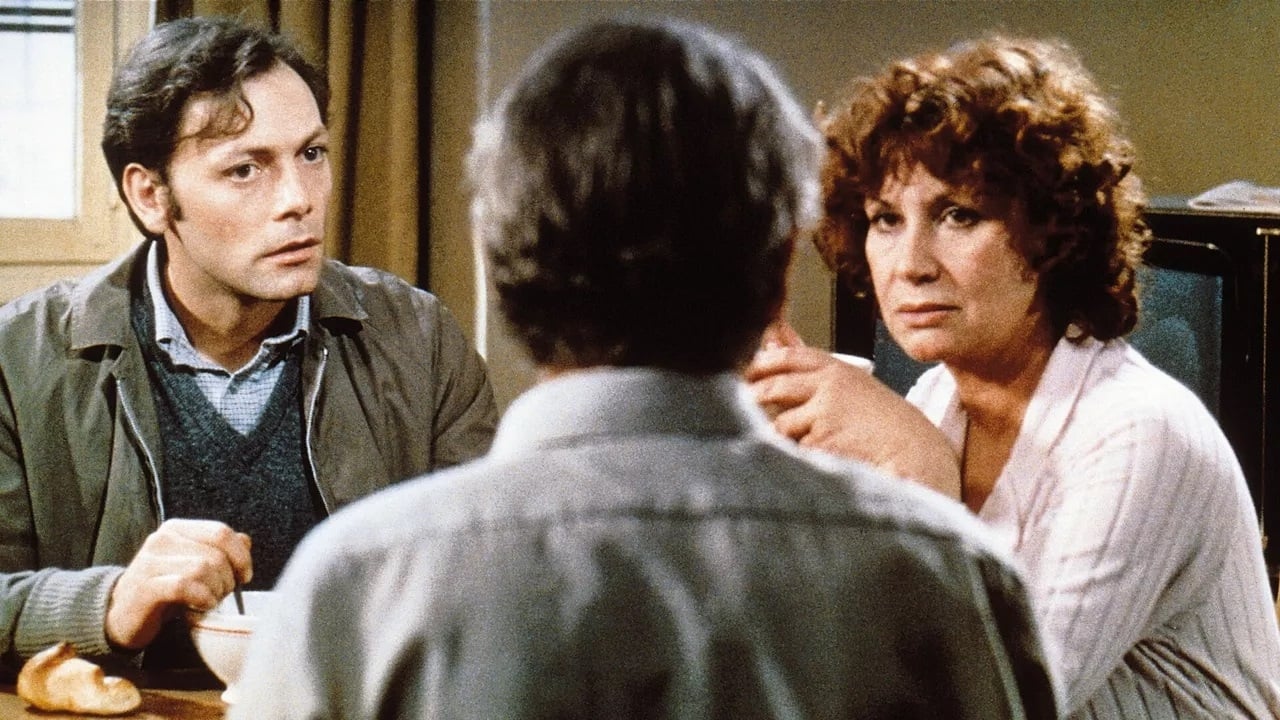
The film opens not with a bang, but with a palpable sense of unease. Bruno Calgagni, portrayed with astonishing vulnerability by the late, great Patrick Dewaere, returns to Paris. He's just served five years in an American prison for drug trafficking, and the shadow of his addiction and incarceration hangs heavy over him. His homecoming is tentative, fraught. He seeks out his father, René (Jacques Dufilho), a stoic, working-class man who wears his disappointment like a second skin. Their initial interactions are excruciatingly real – the silences loaded, the attempts at connection fumbling and often failing. There’s a profound sense of distance, not just physical but emotional, that Sautet, a master of observing human relationships (think César et Rosalie or Les Choses de la vie), captures with unerring precision.
The Weight of Performance
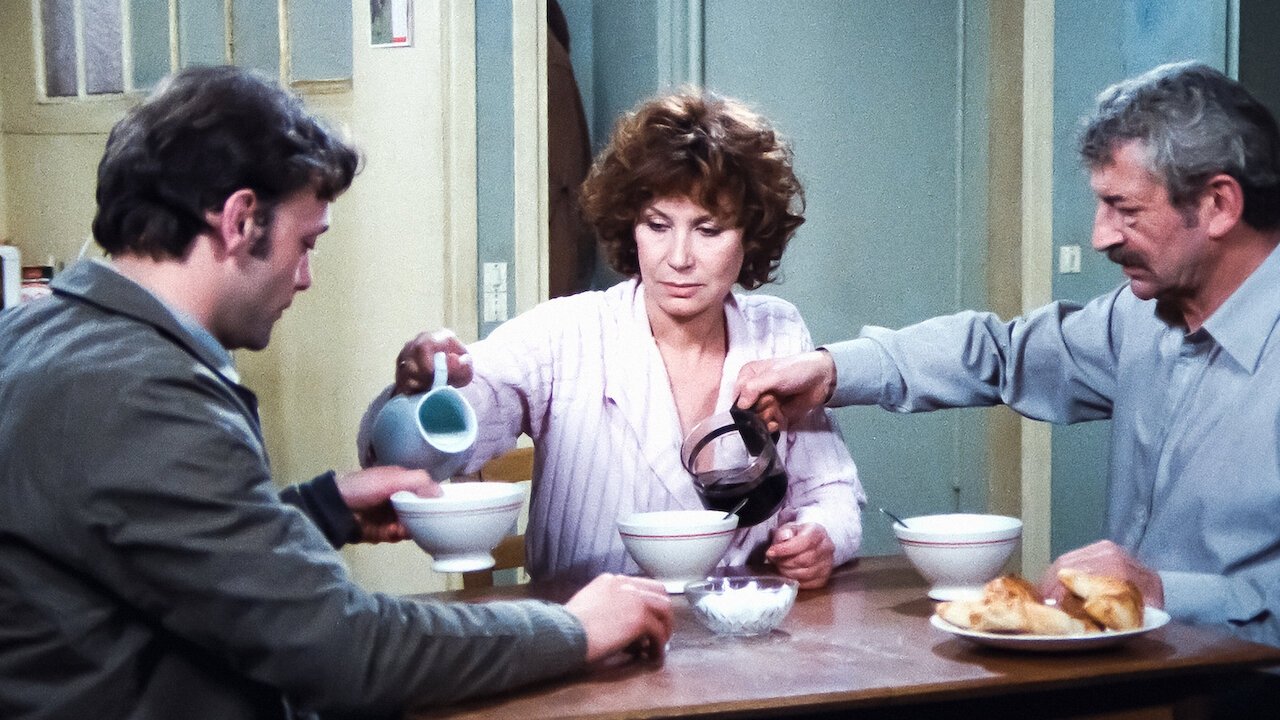
What truly elevates A Bad Son beyond a simple tale of post-prison adjustment are the central performances. Patrick Dewaere is simply mesmerizing. He embodies Bruno's fragility, his simmering anger, his desperate hope, and the ever-present fear of relapse with an intensity that feels almost dangerous. You see the struggle etched onto his face, the nervous energy barely contained beneath the surface. Knowing Dewaere's own tragic trajectory – his suicide just two years after this film's release – lends his performance an almost unbearable poignancy. He wasn't just acting; he seemed to be channeling something deeply personal and raw. It’s a performance that stays with you, a haunting portrayal of a man fighting for his soul.
Equally brilliant is Jacques Dufilho as René. He rightfully won the César Award for Best Supporting Actor for this role, and it’s easy to see why. His René isn't a caricature of a disapproving father. He’s a man broken by grief (Bruno's mother died while he was imprisoned, a fact René initially hides, blaming Bruno indirectly), struggling with his own limitations and the painful love he still holds for his son. The scenes between Dewaere and Dufilho are the film's aching heart – complex, nuanced, and utterly believable depictions of a fractured relationship slowly, tentatively attempting repair.
Finding Light in the Grey
Amidst the struggle, Bruno finds glimmers of hope. He attempts to reintegrate, taking on manual labor, trying to prove his worth not just to his father, but perhaps more importantly, to himself. It’s here he meets Catherine (Brigitte Fossey, forever remembered as the little girl in 1952's Forbidden Games, here radiating warmth and cautious optimism). Catherine is also wrestling with her own dependencies, albeit pharmaceutical ones, and their connection forms another crucial layer of the narrative. Fossey provides a vital counterpoint to the prevailing gloom, offering Bruno a chance at connection and understanding outside the suffocating dynamic with his father. Their relationship isn't presented as a magic cure, but as another complex, fragile bond in a world that offers few easy answers.
Sautet's Quiet Mastery
Claude Sautet directs with a steady, empathetic hand. There's no stylistic flashiness here. The camera observes, often lingering on faces, allowing the actors' subtle expressions and gestures to carry the emotional weight. He captures the specific atmosphere of working-class Paris in the early 80s – the cafes, the workshops, the cramped apartments – creating a world that feels lived-in and authentic. The film tackles difficult themes – addiction, guilt, the societal barriers faced by ex-convicts, the intergenerational misunderstandings – without resorting to preaching or sentimentality. It’s a deeply humanist film, concerned with the small victories and crushing setbacks of ordinary people trying to navigate extraordinary circumstances. One fascinating production detail is how Sautet often worked meticulously with his actors, developing characters through extensive discussion and rehearsal, aiming for that naturalism which feels so effortless on screen but requires immense craft.
Why It Lingers
Watching A Bad Son today, perhaps on a worn-out tape dug out from the back of a shelf or a streaming service discovery, it feels like a powerful antidote to the often simplistic narratives of the era. It doesn’t offer easy resolutions. Bruno’s path is uncertain, his future precarious. Does genuine change stick? Can the bonds broken by betrayal and neglect ever truly mend? The film leaves these questions open, resonating with a truth that feels more profound than any neatly tied-up ending. It reminds us that sometimes the most compelling dramas are found not in explosions or grand gestures, but in the quiet, desperate struggles of the human heart. I remember finding this on a dusty shelf at a local independent video store back in the day, intrigued by the intensity in Dewaere's eyes on the cover art. It wasn't the usual fare, but it certainly left a mark.
Rating: 8.5/10
Justification: A Bad Son earns its high score through its exceptional, deeply affecting performances, particularly from Patrick Dewaere and Jacques Dufilho. Claude Sautet's sensitive, realistic direction and the film's unflinching exploration of difficult themes create a powerful and resonant character study. While its deliberate pace and somber tone might not appeal to everyone seeking typical 80s entertainment, its emotional honesty and masterful craft make it a standout piece of French cinema from the era.
Final Thought: A poignant, sometimes painful, but ultimately rewarding film that showcases the immense talent of Patrick Dewaere and the observational genius of Claude Sautet. It’s a reminder that even amidst the neon glow of the 80s, cinema could still deliver quiet, devastating truths about the human condition.