Buddies
There are some films that arrive like a whisper, yet carry the weight of a scream held back too long. Watching Arthur J. Bressan Jr.'s Buddies today, decades removed from its quiet 1985 arrival, feels like unearthing a time capsule containing not just a story, but a raw, vital artery connecting us directly to the fear, confusion, and desperate need for compassion that defined the early years of the AIDS epidemic. It wasn't the first documentary, but it holds the somber distinction of being the first narrative feature film to confront the crisis head-on, a brave act in an era marked by terrifying silence and devastating loss.
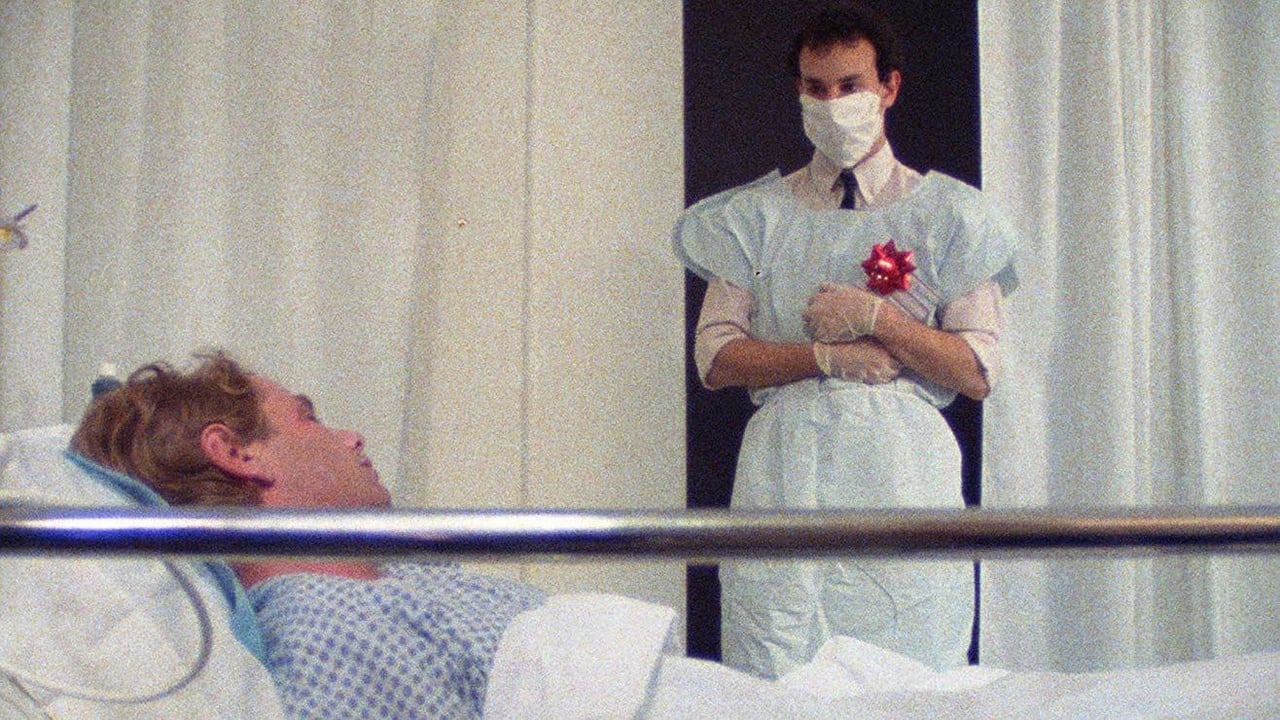
Confined Spaces, Expanding Understanding
The film's setup is deceptively simple, almost theatrical in its containment. We spend nearly the entire runtime within the four walls of a New York City hospital room. Inside, David (the late Geoff Edholm), a gay man ravaged by the then-mysterious illness, witty and defiant even in his decline, is assigned a volunteer "buddy." This buddy is Robert (David Schachter), a younger, seemingly straight, politically naive typesetting compositor, initially motivated more by a vague sense of civic duty – or perhaps morbid curiosity – than genuine empathy. The narrative unfolds primarily through their conversations, charting the gradual, often uneasy erosion of Robert's ignorance and prejudice under the force of David's humanity and the stark reality of his suffering.
Echoes of Truth
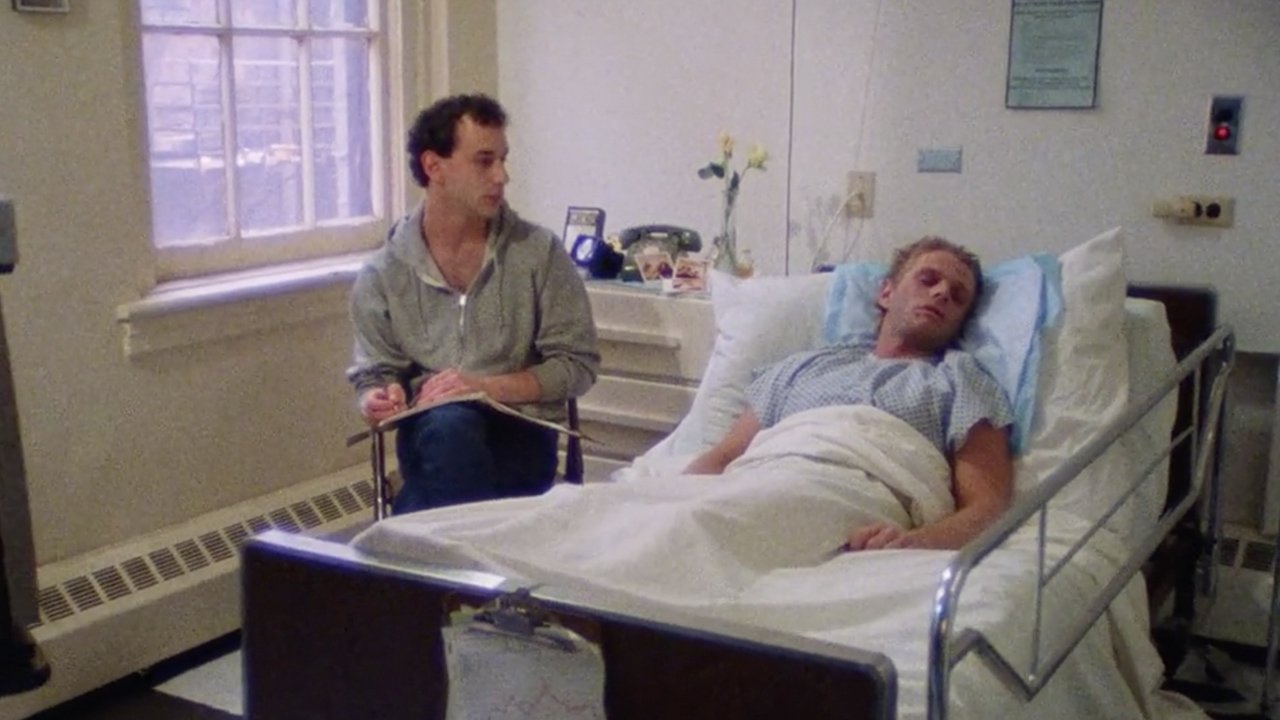
What elevates Buddies beyond a mere historical footnote are the performances, particularly that of Geoff Edholm. His portrayal of David is simply unforgettable. There’s no trace of mawkish sentimentality; instead, we get intelligence, anger, vulnerability, and a fierce refusal to be reduced to a statistic or a symbol. He educates Robert not through lectures, but through lived experience, sardonic humor, and moments of profound weariness. David Schachter effectively embodies the journey from naive outsider to compassionate witness, his gradual awakening mirroring perhaps what many viewers outside the immediate crisis might have felt at the time. Their interactions feel authentic, capturing the awkwardness, the hesitant trust, and the eventual, undeniable human connection forged in the shadow of death. The power lies in the quiet moments, the shared glances, the difficult questions asked and sometimes left unanswered.
A Testament Forged in Urgency
Understanding the context of Buddies' creation deepens its impact immeasurably. This wasn't a studio picture; it was an act of guerrilla filmmaking born from necessity. Arthur J. Bressan Jr., a filmmaker primarily known for documentaries and work in the adult film industry, saw the unfolding tragedy and felt compelled to bear witness. He shot Buddies with astonishing speed – reportedly in just nine days – on a shoestring budget of around $27,000 (roughly $77,000 today). This urgency permeates the film; there's no gloss, no elaborate production design, just the stark reality of the hospital room and the faces of the actors. Tragically, the film became an even more poignant testament when Bressan Jr. himself succumbed to AIDS-related complications only two years after its release, in 1987. Adding another layer of heartbreak, lead actor Geoff Edholm also passed away from the disease in 1991. Knowing this history transforms the viewing experience; it’s impossible not to see the film as both a narrative and a deeply personal statement made under the most challenging circumstances imaginable. Finding a copy back in the day wasn't always easy either; its limited release meant it circulated more like vital underground samizdat than a typical rental store staple, adding to its almost mythic status for those who sought it out.
The Weight of Simplicity
The film's technical limitations, born from its meager budget, arguably become strengths. The unadorned cinematography and straightforward editing keep the focus relentlessly on the characters and their dialogue. There’s no soaring, manipulative score; the sounds are often just the sterile noises of the hospital, punctuated by the raw emotion in the actors' voices. Bressan Jr.'s direction is direct and unflinching. It doesn't shy away from the physical toll of the illness, nor the political anger simmering beneath David's commentary on government inaction and societal indifference. The claustrophobia of the single setting amplifies the sense of isolation felt by those afflicted, while simultaneously forcing an intense intimacy between the two men, and by extension, the viewer.
Why It Still Matters
Decades later, after numerous other films and plays have explored the AIDS crisis with larger budgets and wider audiences (Longtime Companion, Philadelphia, Angels in America), why does Buddies retain its power? Perhaps it’s the raw immediacy, the sense of experiencing the dawning horror of the epidemic almost in real-time through Robert's eyes. Perhaps it’s the film’s quiet insistence on individual humanity against a backdrop of mass hysteria and political neglect. What does David’s struggle reveal about the enduring need for empathy when facing the unknown or the feared? How might this film’s perspective resonate differently today, in an era grappling with new health crises and persistent social divisions? The questions linger, testament to the film's quiet force. It’s not an easy watch; it demands emotional engagement and confronts viewers with uncomfortable truths. But its importance as a pioneering piece of queer cinema and a historical document is undeniable.
Rating Justification: 9/10
Buddies earns a high rating not for technical polish or grand cinematic spectacle, but for its profound historical significance, its courageous tackling of a devastating subject at a time when few dared, and the deeply moving, authentic performances at its core, especially from Geoff Edholm. The film's raw, unvarnished approach, born from necessity, becomes its greatest strength, creating an intimate and unforgettable portrait of human connection amidst tragedy. While its low budget is apparent, it rarely detracts from the emotional impact. Its value as a historical artifact and a testament to the human spirit in the face of overwhelming adversity is immense.
Final Thought: More than just a movie, Buddies feels like a fragile, essential piece of history rescued from the silence, demanding we listen, remember, and never forget the human cost when compassion fails.