What defines sanity? Is it compliance, a quiet acceptance of the box society builds around us? Or is it the fierce, perhaps messy, struggle to assert one's own truth, even when that truth is deeply uncomfortable? The 1987 courtroom drama Nuts throws these questions under a harsh spotlight, forcing us to confront our own definitions within the pressure cooker of a competency hearing. It’s a film that doesn’t offer easy answers, lingering long after the VCR clicks off.
Beyond the Tabloid Surface
At its core, Nuts presents a stark scenario: Claudia Draper (Barbra Streisand), a high-priced sex worker, is charged with manslaughter after killing a violent client in self-defense. The setup screams sensationalism, but the film quickly pivots. Her affluent, estranged parents (Karl Malden and Maureen Stapleton) and the state prosecutor push not for a trial, but for a declaration of mental incompetence. They want Claudia tucked away quietly, a family embarrassment neutralized rather than examined. But Claudia refuses to be labeled "nuts." She demands her day in court, her right to stand trial, even if it means facing prison. It’s a battle not for innocence, but for agency, for the right to be heard as a rational human being despite her profession and her volatile demeanor.
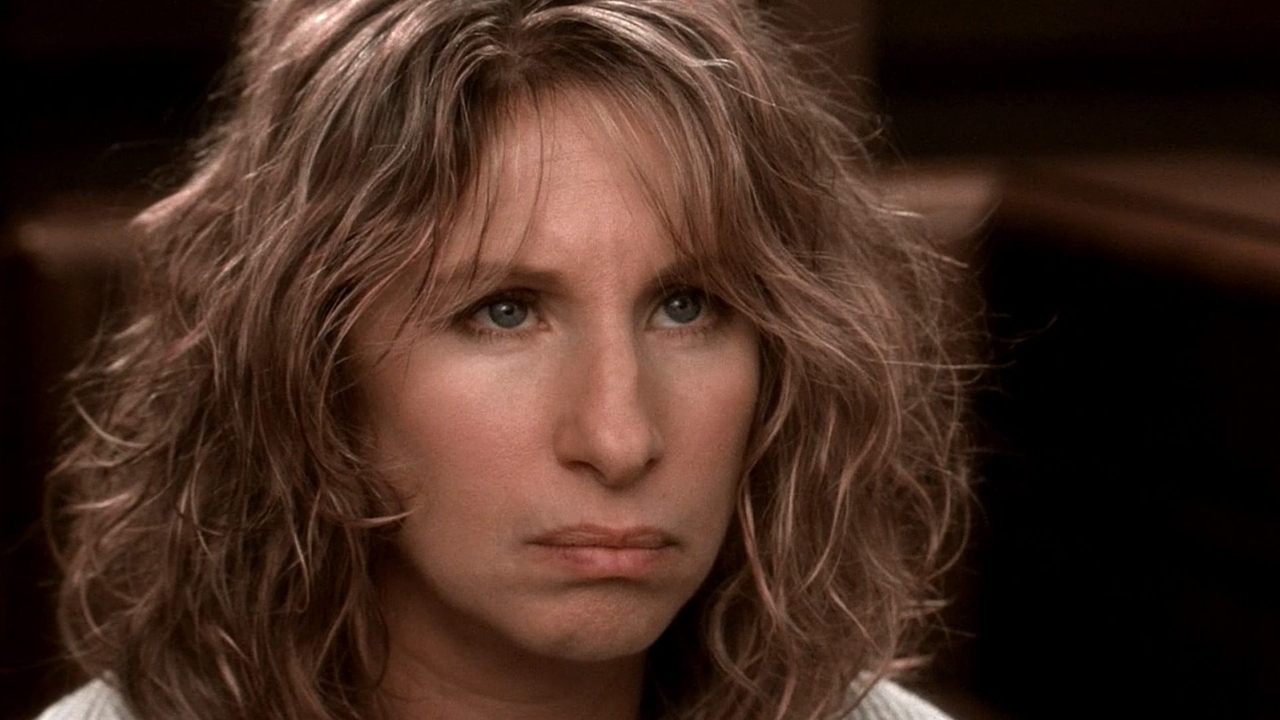
I remember seeing the striking VHS cover back in the day – Streisand's defiant gaze promising something intense. And intense it is. The film largely unfolds within the confines of the courtroom during her competency hearing, creating a claustrophobic atmosphere where every word, every flicker of emotion, is magnified. Director Martin Ritt, a filmmaker known for socially conscious dramas like Norma Rae (1979), brings a steady, unfussy hand, allowing the drama to build through character interaction and powerhouse performances rather than flashy cinematic tricks. Ritt, nearing the end of his distinguished career, knew how to frame human conflict.
A Force of Nature Named Claudia
You simply cannot discuss Nuts without focusing on Barbra Streisand. This was clearly a passion project for her; she not only stars but also produced the film and composed the poignant end title song, "Here We Are At Last." Her portrayal of Claudia Draper is a whirlwind – abrasive, intelligent, wounded, sarcastic, and utterly unwilling to be managed. It’s a performance that walks a tightrope. Is Claudia eccentric, traumatized, or truly unstable? Streisand leans into the ambiguity, refusing to soften Claudia's edges or make her conventionally likable. She's challenging, frustrating, and yet, utterly compelling. It's a raw, theatrical turn that feels earned, stemming from a deep well of past trauma that the hearing gradually, painfully unearths.
Interestingly, Streisand initially acquired the rights to Tom Topor's original stage play with the intention of directing it herself. While Ritt ultimately took the helm, Streisand's deep investment is palpable in every frame. Her commitment elevates what could have been melodrama into something more complex. She’s not just playing a character; she’s fighting Claudia’s corner with every fiber of her being. This dedication resulted in Golden Globe nominations for both Streisand and her co-star.
Reluctant Allies and Painful Truths
Playing opposite Streisand's hurricane is Richard Dreyfuss as Aaron Levinsky, the weary public defender assigned to Claudia's case. Dreyfuss, who had already charmed audiences in films like Jaws (1975) and won an Oscar for The Goodbye Girl (1977), brings a grounded counterpoint. Levinsky initially sees Claudia as just another difficult case, perhaps even agreeing with the state's assessment. But as he witnesses her sharp intellect and begins to understand the manipulation she’s facing, his skepticism evolves into staunch advocacy. Their dynamic crackles – two strong personalities clashing, challenging, and ultimately forging a fragile trust. Dreyfuss embodies the audience's journey, moving from judgment to empathy.
The supporting cast is a masterclass in veteran talent. Maureen Stapleton and Karl Malden are heartbreaking as Claudia’s parents, their desire to protect the family name (and themselves) warring with buried guilt and a fractured love for their daughter. Eli Wallach is chillingly effective as Dr. Morrison, the psychiatrist arguing for Claudia’s incompetence. And in a casting choice that likely jolted audiences even then, Leslie Nielsen appears in flashbacks as the victim, Allen Green. Seeing him here, utterly devoid of the slapstick persona cemented by Police Squad! and soon, The Naked Gun (1988), is a potent reminder of his dramatic range. It’s a small but crucial role, handled with unsettling seriousness.
Unpacking the Past, Facing the Present
Nuts benefits significantly from its expansion beyond the single courtroom set of the original play (adapted by Topor himself, along with Darryl Ponicsan and Alvin Sargent). The flashbacks and brief scenes outside the hearing provide crucial context, hinting at the devastating childhood experiences that shaped Claudia. The film doesn’t excuse her behavior, but it demands we understand its roots. It bravely tackles themes of sexual abuse, parental neglect, and the lasting scars of trauma – heavy material handled with directness. This wasn't light viewing for the multiplex crowd of 1987, and its R-rating reflected the mature themes and raw language.
While not a massive blockbuster (grossing around $31 million domestically on a $25 million budget – roughly $81 million on a $65 million budget today), Nuts made its mark as a challenging adult drama. It’s a film that stays with you, prompting reflection on how quick we are to judge, label, and dismiss those who don't fit neatly into societal expectations. Does Claudia’s profession invalidate her pain? Does her anger negate her intelligence? The film argues fiercely that it does not.
Final Thoughts
Nuts remains a potent piece of cinema, anchored by a towering, fearless performance from Barbra Streisand and stellar support across the board. It’s an uncomfortable film, deliberately so, forcing viewers into the pressure cooker alongside Claudia as she fights for her right to be seen and heard. While some might find its theatricality occasionally borders on overwrought, the emotional core is undeniably powerful and its questions about sanity, trauma, and justice resonate just as strongly today. It’s a demanding watch, but a rewarding one for those willing to engage with its difficult truths.
Rating: 8/10
It's a film that might have gathered dust on the rental shelf next to more explosive 80s fare, but Nuts offers something far more lasting: a raw, unsettling, and deeply human drama that refuses to look away. What lingers most isn't the verdict, but the enduring question of who truly gets to decide what's "normal."