The Whales of August
Okay, pull up a comfy chair, maybe pour yourself something quiet. Let's talk about a film that feels less like a product of the bombastic 80s and more like a beautifully preserved artifact from another time, discovered tucked away on a dusty video store shelf. I'm talking about The Whales of August (1987), a film whose power lies not in explosions or synth scores, but in the profound stillness between words, in the weight of shared history etched onto legendary faces.
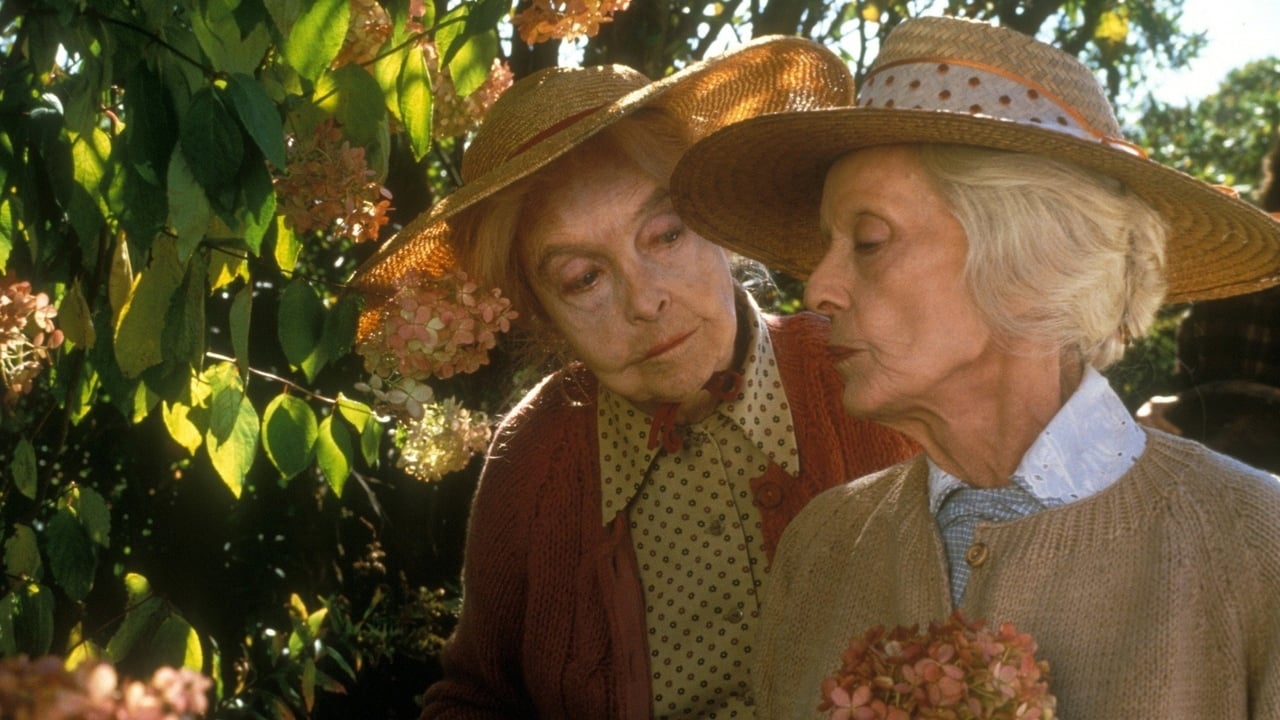
Echoes Across the Water
What immediately strikes you is the atmosphere. Director Lindsay Anderson, known for bracing, often satirical works like If.... and O Lucky Man!, guides this picture with an almost startling gentleness. We're invited to spend time on a picturesque Maine island with two elderly sisters, Libby Strong (Bette Davis) and Sarah Webber (Lillian Gish), as they navigate the twilight of their lives in the summer home they've shared for decades. The salty air feels palpable, the creak of the porch swing a near-constant rhythm. It’s a film built on mood, on the quiet accumulation of moments, memories, and unspoken tensions that stretch back further than most viewers had even been alive.
Titans Sharing a Porch
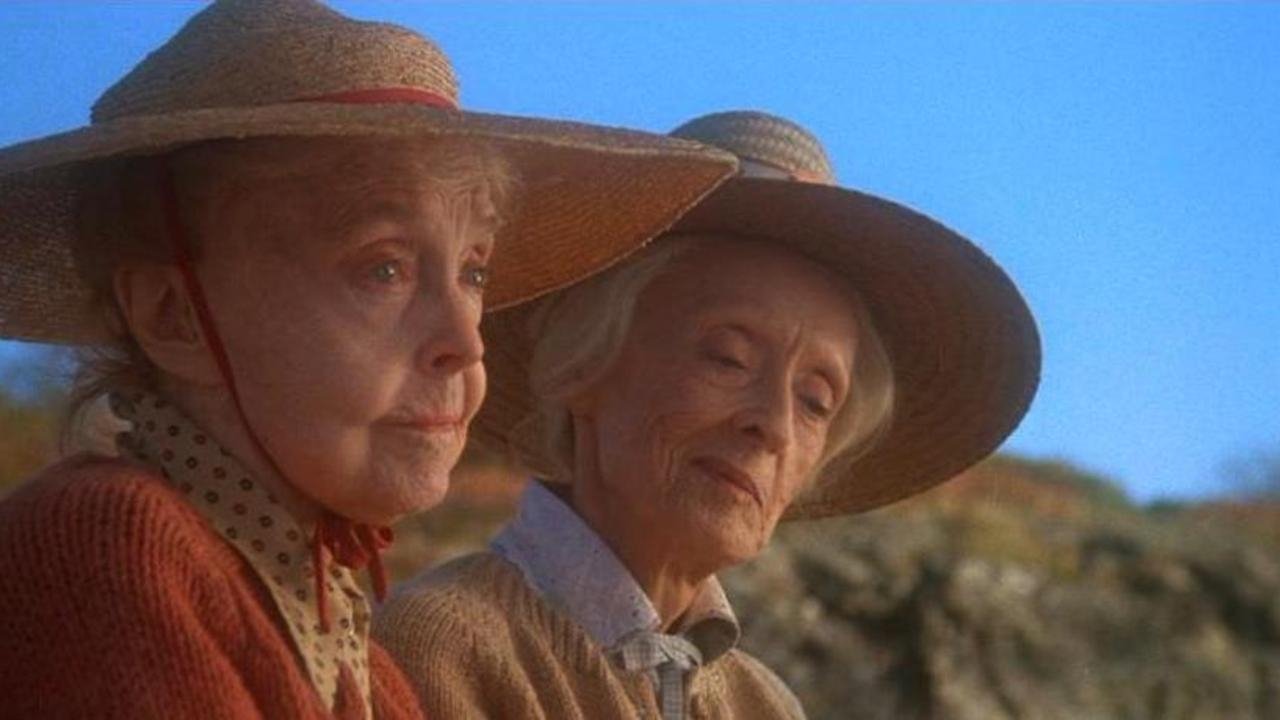
Let's be honest, the main draw here, the reason this tape likely got rented back in the day despite its lack of car chases, is the cast. Seeing Bette Davis and Lillian Gish – two absolute titans of cinema, representing distinct eras of Hollywood history – share the screen for the first and only time is an event in itself. And their performances are extraordinary, deeply felt portrayals of aging and sisterhood.
Gish, who was a staggering 93 years old during filming (and whose career stretched back to the earliest days of silent film with D.W. Griffith), embodies Sarah's gentle optimism and quiet resilience. There's a luminous quality to her, a connection to the natural world around her, even as she cares for her more difficult sister. It’s a performance of grace under pressure.
Davis, on the other hand, is pure fire, even dimmed by age and ill health. At 79, nearly blind and recovering from a stroke that impacted her speech slightly, she infuses the cantankerous, demanding Libby with a vulnerability that pierces through the sharp edges. You see the fear beneath the bluster, the frustration of a once-vital woman confined by her failing body. Watching Davis navigate Libby's prickliness, knowing the physical hurdles she overcame just to be there (reportedly, cue cards were sometimes needed due to her vision), adds another layer of poignancy. It was a testament to her indomitable spirit, a quality that defined her entire career from Jezebel to All About Eve. There's a famous story that Davis insisted on top billing over Gish, a final flicker, perhaps, of that legendary competitive drive, even though Gish arguably had the slightly larger role.
Visitors and Memories
The supporting cast adds delicate shading. Vincent Price, stepping away from the horror persona cemented by films like House of Wax and his collaborations with Roger Corman, offers a wonderfully nuanced turn as Mr. Maranov, an ageing Russian aristocrat seeking companionship. David Berry, who wrote the screenplay based on his own stage play, reportedly expanded the role specifically for Price, and it provides a welcome counterpoint to the sisters’ dynamic – a touch of old-world charm tinged with its own loneliness. And we can't forget Ann Sothern as the lively, gossiping neighbour Tisha, a role that earned her a well-deserved Academy Award nomination for Best Supporting Actress. Her energy briefly disrupts the quietude, reminding the sisters (and the audience) of the world beyond their porch.
A Director's Quietude
Filming on location on Cliff Island, Maine, lends an undeniable authenticity. You feel the isolation and the beauty of the place as a character in itself. Anderson's direction is restrained, focusing on faces, gestures, and the rhythms of daily life. There are no flashy techniques; the camera exists primarily to capture the performances and the serene, yet sometimes melancholic, environment. It’s a far cry from the anarchic energy of his earlier films, showing a remarkable sensitivity to the material and deep respect for his legendary actors. It’s said that Anderson agreed to direct specifically because of the chance to work with Gish and Davis. He navigated the challenges – the actresses' ages, Davis's health issues – with patience, allowing their profound screen presence to carry the film.
More Than Just Nostalgia
Watching The Whales of August today, perhaps on a worn VHS copy rescued from a closing rental store (I swear I remember seeing this one nestled between louder dramas on the shelf), feels different than simple nostalgia for the 80s. It taps into something deeper – a contemplation of time itself. The film deals quietly with themes of mortality, the function of memory (both cherished and painful), the enduring, complex bonds of family, and the simple, profound act of facing the end with dignity. What does it mean to have lived a long life? How do we reconcile with the past as the future shrinks? These aren't questions often tackled in the mainstream cinema of any era, let alone the often youth-obsessed 80s.
The film wasn't a box office smash – its modest $1.3 million gross didn't recoup the estimated $3.3 million budget. But its value isn't measured in ticket sales. It exists as a precious document, a final showcase for incomparable talents, and a meditation on life's closing chapters.
Rating: 8/10
Justification: While the pacing is deliberately slow and the narrative minimal, the film achieves exactly what it sets out to do. It's a masterclass in acting, carried by the monumental presence of Davis and Gish, sensitively supported by Price and Sothern, and guided by Anderson's respectful direction. Its power lies in its quiet emotional resonance and thematic depth, offering a rare and moving look at aging. It loses a couple of points perhaps for being so quiet that some might find it uneventful, but for those willing to meet it on its own terms, it's deeply rewarding.
Final Thought: The Whales of August lingers like the scent of sea air after a storm – quiet, profound, and a poignant reminder of the giants who once walked the silver screen, leaving us this beautiful, bittersweet farewell.