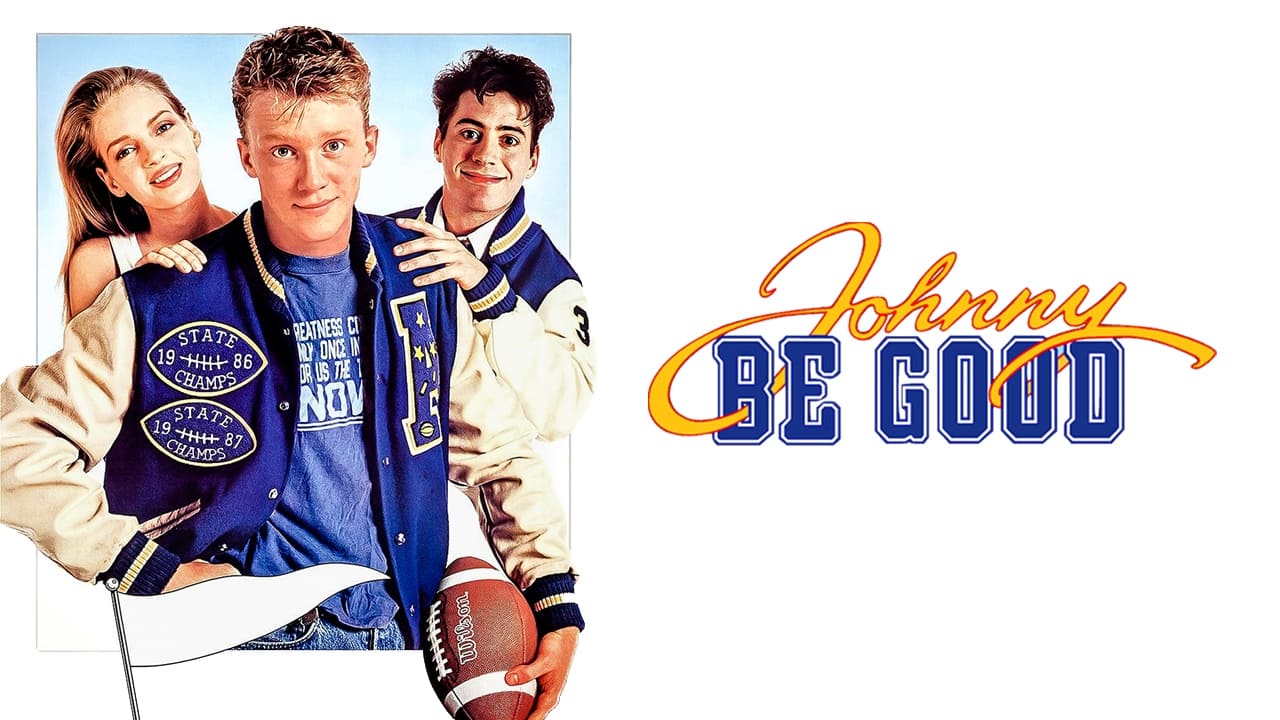
Johnny Be Good
Okay, remember cruising the aisles of the video store, maybe grabbing a pizza on the way home, ready for a Friday night double feature? Sometimes you'd stumble onto a cover that just screamed pure, unadulterated 80s energy. Maybe it was the slightly ridiculous pose, the promise of hijinks, or just a familiar face trying something new. That’s the feeling I get popping the metaphorical tape of Bud S. Smith’s 1988 teen comedy Johnny Be Good into the VCR of my mind. It’s loud, it’s messy, it’s got hair bigger than its ambitions, and honestly? It’s kind of a blast from the past in the most endearingly chaotic way.
From Geek Chic to Quarterback Physique
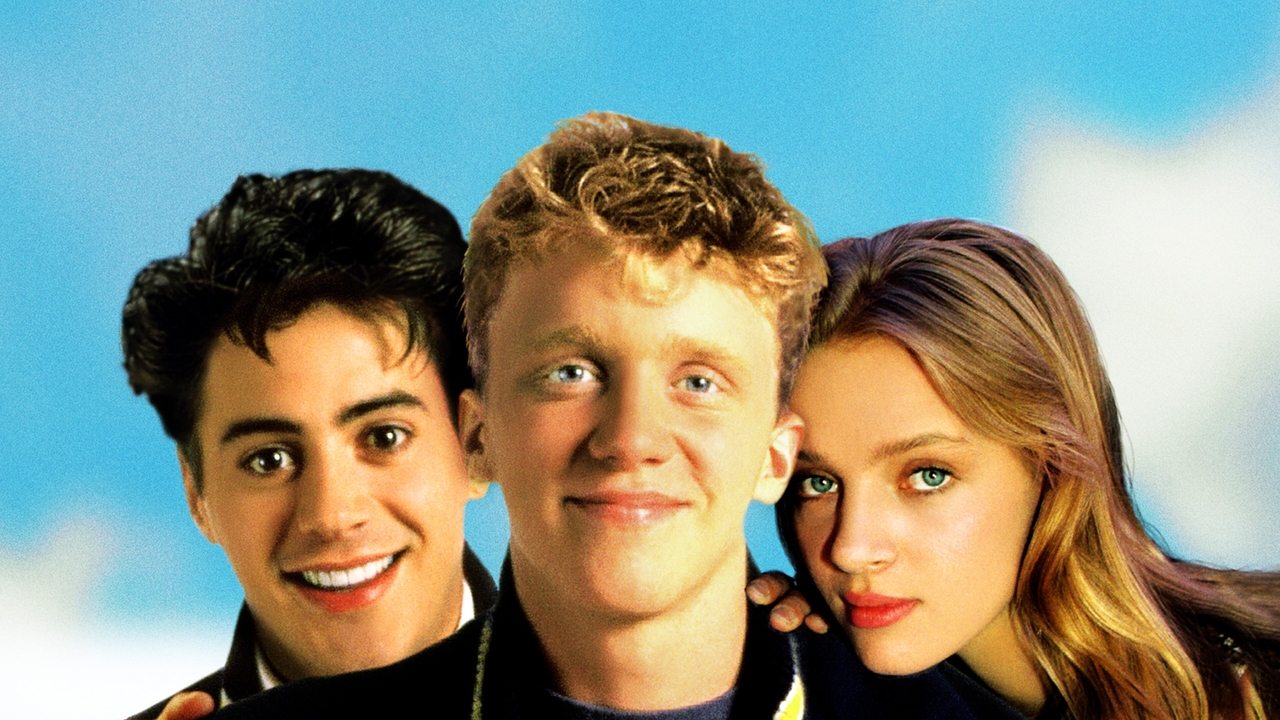
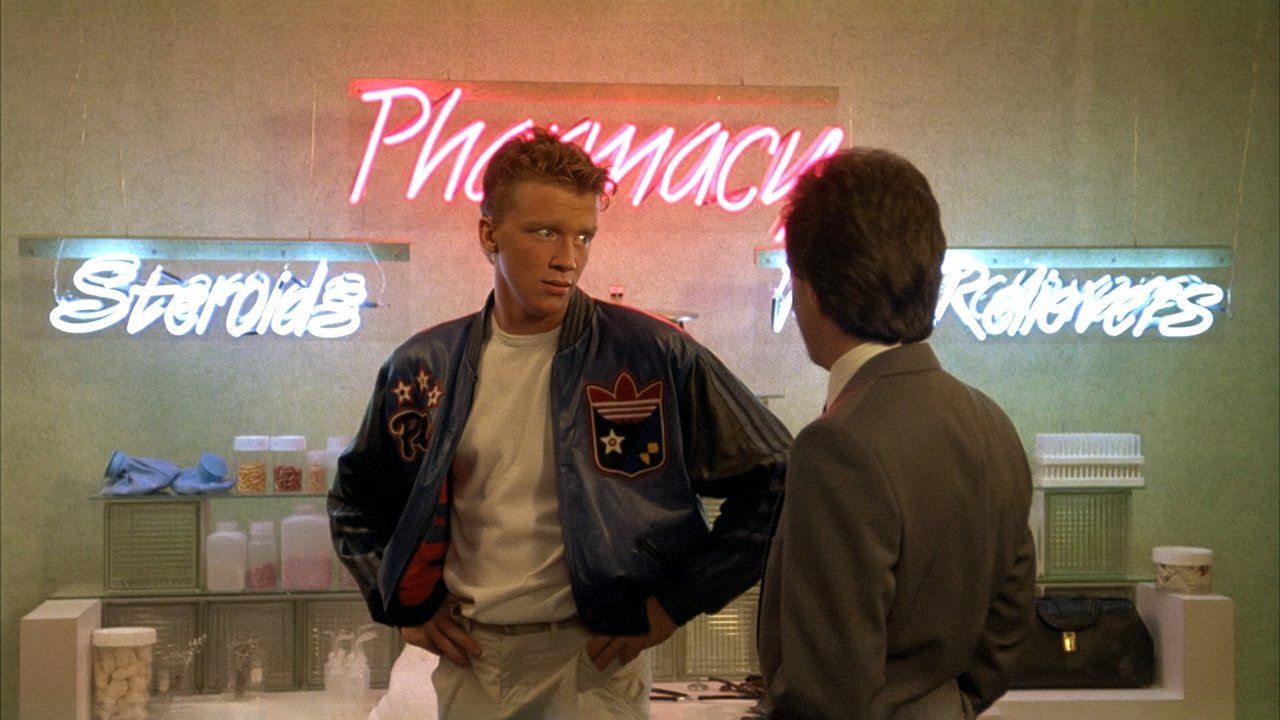
The first thing that likely struck anyone grabbing this off the shelf back in '88 was seeing Anthony Michael Hall on the cover. Gone was the lanky, lovable nerd from Hughes classics like Sixteen Candles and The Breakfast Club. In his place stood Johnny Walker, the nation's #1 high school quarterback prospect, looking like he’d spent the interim year doing nothing but hitting the weights and raiding a hair metal band's wardrobe. Hall famously bulked up significantly for the role, a deliberate attempt to break free from typecasting. Seeing him try to pivot into this All-American jock archetype is a fascinating snapshot of an actor trying to navigate the pressures of post-teen stardom. Does he fully convince as the gridiron god? Well... let's just say the effort is visible.
The premise itself dives headfirst into the absurdity of college football recruitment, a topic that felt ripped from headlines even then. Johnny is being courted by seemingly every university with a football program, and the lengths these recruiters go to are hilariously over-the-top. We're talking cars, cash, women, luxury accommodations – a veritable smorgasbord of NCAA violations presented as pure comedic fodder. It's penned by Steve Zacharias and Jeff Buhai, the minds behind Revenge of the Nerds, so you can expect a similar blend of broad satire and lowbrow humor, albeit filtered through a slightly more cynical, late-80s lens.
Enter the Tasmanian Devil in Human Form
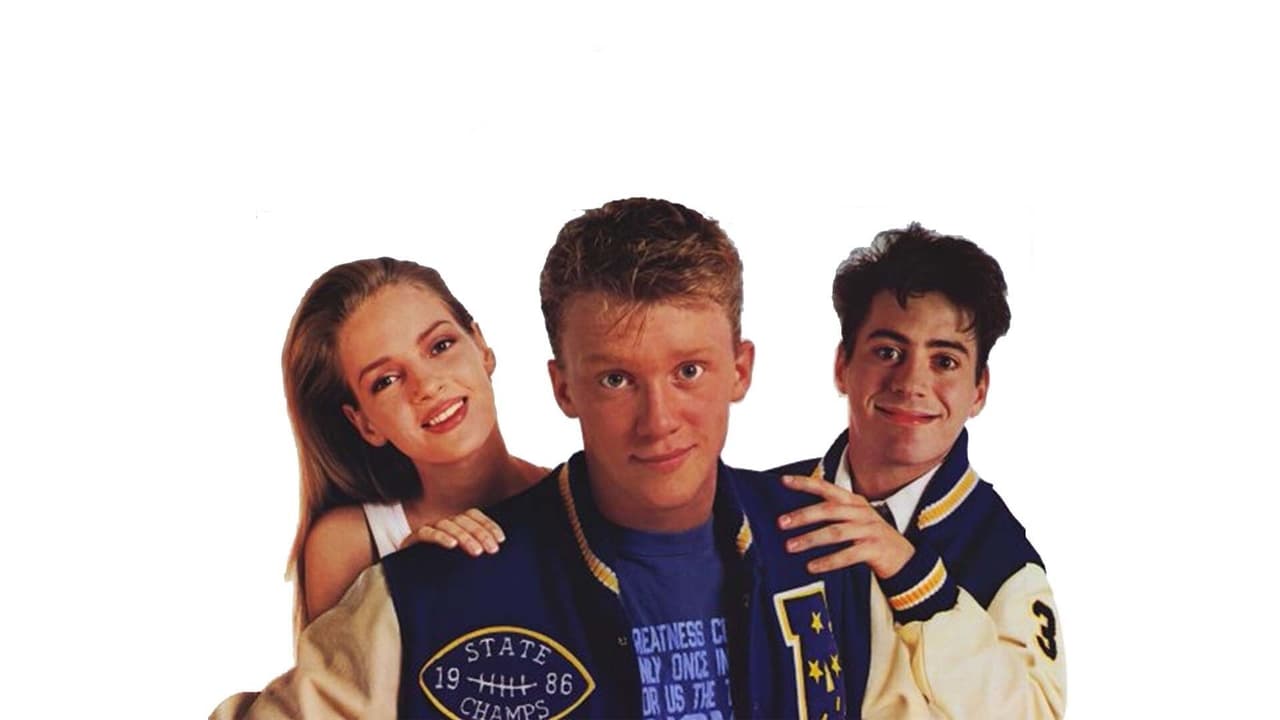
While Hall anchors the film as the somewhat bewildered eye of the recruitment hurricane, the real spark ignites whenever his best friend, Leo Wiggins, appears. Played by a young, ridiculously energetic Robert Downey Jr., Leo is less a character and more a force of nature. He’s the id to Johnny’s conflicted ego, constantly pushing him towards the most lucrative and ethically dubious offers. Downey Jr. absolutely buzzes here, delivering lines with machine-gun speed and embodying the film's anarchic spirit. It's an early glimpse of that raw charisma and barely contained mania that would define much of his later work. Watching him now, knowing the career trajectory that followed, adds a whole other layer to the performance. It’s a shame the film didn’t perform better at the box office (grossing around $17.5 million against a reported budget somewhere in the $10 million range), as his performance deserved more eyeballs.
Adding another layer of familiarity, we get Paul Gleason essentially reprising his authoritarian blowhard persona from The Breakfast Club, this time as Johnny's exploitative high school coach. Seeing him square off against Hall again provides a few chuckles, though it underscores how much the film leans on established personas. And keep an eye out for a very young Uma Thurman as Johnny's supportive girlfriend, Georgia. It’s not a role that gives her much to do besides look concerned or encouraging, but her presence is notable given her later iconic status.
Big Hair, Big Temptations, Big… Meh?
So, how does Johnny Be Good hold up beyond the nostalgia factor? It's undeniably a product of its time. The humor is often crude, the plot barrels along with little regard for subtlety, and the sheer 80s-ness of it all – the fashion, the music (hello, Judas Priest and Ted Nugent on the soundtrack!), the general vibe – can be overwhelming. Director Bud S. Smith, primarily known for his stellar editing work on films like The Exorcist and Flashdance, doesn't bring a particularly distinctive visual style here. The direction feels competent but somewhat anonymous, letting the performances and the script's wilder impulses carry the show.
The film attempts satire, aiming its sights squarely at the corrupt world of college sports recruitment. While some of the scenarios are amusingly exaggerated, the critique never quite lands with the sharpness it could have. It often feels more interested in the next gag or outrageous scenario than in making a coherent point. Remember the sheer chaos of those recruitment visits? The parties, the promises – it felt like a fever dream version of what we heard whispered about back then. Filmed largely in Texas, the locations provide an authentic backdrop for the high school football craze, but the story sometimes feels like it's just bouncing from one zany set piece to another.
Still, there's an undeniable energy to Johnny Be Good. It captures that specific late-80s teen movie feeling – a bit crass, a bit messy, but fundamentally good-natured underneath the noise. It's the kind of movie you'd watch with friends, laughing at the ridiculous parts and maybe quoting RDJ's wilder lines. The critical reception at the time was, frankly, pretty brutal, but like many films from the era, it's found a certain affectionate following among those who remember renting it on a whim.

Rating: 5/10
Justification: The film earns points for its high energy, Robert Downey Jr.'s scene-stealing performance, and its time-capsule quality as a specific type of 80s teen comedy attempting social satire. However, it loses points for its often-crude humor, underdeveloped characters (especially the female roles), lack of directorial flair, and a satirical edge that feels blunted. Anthony Michael Hall's central performance, while earnest, doesn't quite overcome the awkwardness of the casting shift. It's a memorable curiosity, but far from a classic of the genre.
Final Take: Johnny Be Good is like finding that goofy high school yearbook photo – slightly embarrassing, definitely dated, but guaranteed to spark a nostalgic smirk. It’s a chaotic, uneven blitz of 80s excess, powered more by RDJ's early-career voltage than a cohesive game plan, but sometimes, that kind of messy energy is exactly what you need from a trip back to VHS Heaven.
You Might Also Enjoy
One Crazy Summer
1986
Little Monsters
1989
House Party
1990
Dutch
1991
Revenge of the Nerds
1984
Hot Bubblegum
1981
Private Lessons
1981
Billy Madison
1995
Clueless
1995
Romy and Michele's High School Reunion
1997
Soapdish
1991
The Breakfast Club
1985
The Millionaire with Slippers
1983
The Sure Thing
1985