Nine Months
Alright, rewind your minds with me. Picture this: Friday night, the glow of the video store beckoning. You wander the aisles, maybe grab some microwave popcorn, and your eyes land on that familiar blue-ish cover featuring a very flustered-looking Brit holding a baby book like it's ticking. Yep, we're sliding 1995's Nine Months into the VCR tonight, a film that arrived riding a wave of specific 90s energy.
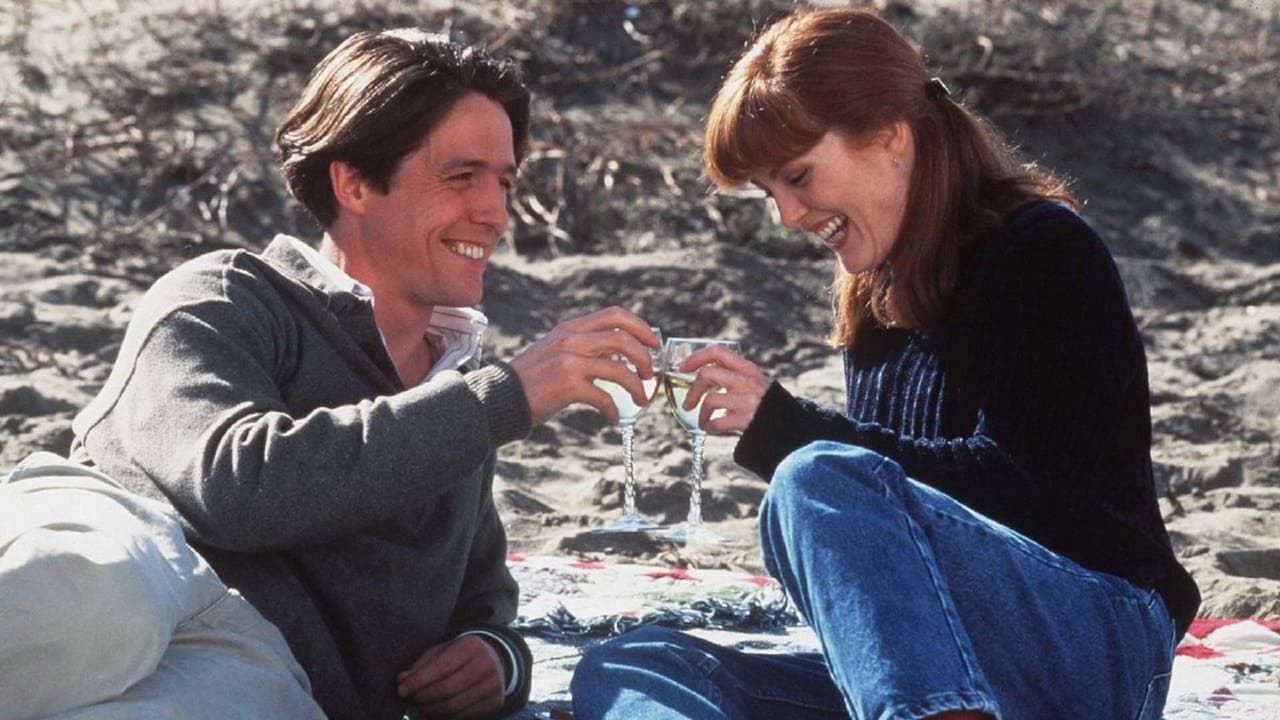
This wasn't some gritty indie find; this was mainstream studio comedy hitting its stride, directed by Chris Columbus, a man who knew a thing or two about chaos colliding with family life after giving us Home Alone (1990) and Mrs. Doubtfire (1993). Nine Months aimed squarely at the date night crowd, banking heavily on the transatlantic charm offensive of its leading man.
Stammering Towards Fatherhood
And what a leading man! This was Hugh Grant's big American studio debut following his breakout role in Four Weddings and a Funeral (1994). Columbus reportedly saw Four Weddings and knew he had to have Grant for the lead role of Samuel Faulkner, the commitment-averse child psychologist whose seemingly perfect life with ballet teacher Rebecca (Julianne Moore) implodes when she announces she's pregnant. Grant leans hard into his now-iconic persona: the floppy hair, the charmingly awkward stammer, the wide-eyed panic disguised as sophisticated British reserve. His Samuel isn't just hesitant about fatherhood; he’s practically allergic to it, spiraling into comedic neurosis that powers much of the film. It’s a performance that perfectly captured his rising star power, even if the timing was… interesting. Nine Months premiered shortly after Grant's infamous L.A. arrest, an off-screen drama that certainly didn't hurt the film's visibility, proving the old adage about publicity.
Surrounding the Panic
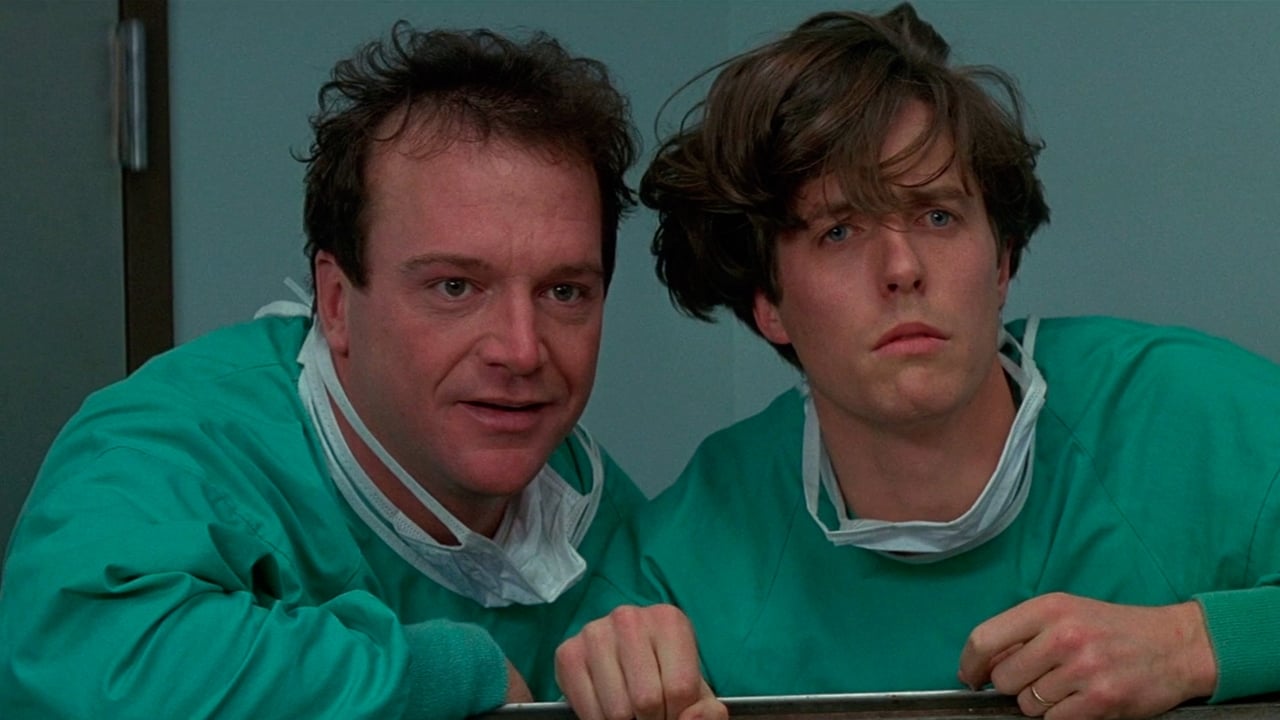
While Grant’s anxiety is the engine, the film wisely surrounds him with a stellar cast. Julianne Moore, already showcasing the talent that would make her a powerhouse, provides the necessary warmth and grounding as Rebecca. She’s the emotional anchor trying to navigate Samuel’s meltdown while dealing with her own journey. Then you have the polar opposites: Marty and Gail Dwyer, played with unrestrained, almost terrifying enthusiasm by Tom Arnold and the ever-brilliant Joan Cusack. They are the walking, talking embodiment of chaotic family life – multiple kids, zero volume control, questionable parenting advice. They’re either hilariously relatable or gratingly over-the-top, depending on your tolerance, but undeniably memorable. And let’s not forget a smooth, reassuring Jeff Goldblum as Samuel’s artist friend Sean, dispensing advice with his signature cool cadence.
Interestingly, this very American comedy is actually a remake of a French film, Neuf mois (1994), written and directed by Patrick Braoudé. Columbus adapted it, transplanting the story to San Francisco (plenty of lovely establishing shots of the city) and amplifying the slapstick and culture clash elements for a broader US audience. The film certainly connected – made for around $45 million, it pulled in nearly $140 million worldwide, proving Columbus and Grant were a bankable combination.


Enter the Doctor
But let's be honest. For many of us rewatching this on tape back in the day, there was one sequence we’d practically fast-forward to. I’m talking, of course, about the arrival of Dr. Kosevich. In an uncredited, show-stopping cameo, Robin Williams bursts into the film as a frantic, possibly incompetent Russian obstetrician. It’s pure, uncut Williams, a whirlwind of manic energy and improvised genius. Reportedly, much of his dialogue was made up on the spot, and you can see Grant and Moore genuinely trying to keep straight faces. It’s a comedic injection so potent it almost throws the rest of the film off balance, but damn, is it funny. Wasn't that cameo just a jolt of pure comedic electricity back then? It felt like a special treat smuggled into the movie.
The 90s Studio Shine
Watching Nine Months now feels like slipping into comfortable, slightly dated clothes. It has that bright, glossy look common to mid-90s studio comedies – competently shot, well-lit, moving at a brisk pace. There are no gritty practical effects to marvel at here, obviously, but there’s a certain charm to its straightforward presentation. The physical comedy, like Samuel’s disastrous attempts at Lamaze or his encounters with the Dwyer children, feels very much of its era – broad, sometimes predictable, but delivered with conviction. Hans Zimmer provides the score, offering up a lighter touch than his usual epic soundscapes, perfectly fitting the rom-com mood.
Critics at the time were somewhat mixed, often calling it formulaic and predictable, but audiences largely embraced its blend of sentimentality and slapstick. It wasn't groundbreaking cinema, but it delivered exactly what it promised: a funny, heartwarming (if occasionally frantic) look at impending parenthood, anchored by a star operating at peak charm-offensive levels.
***
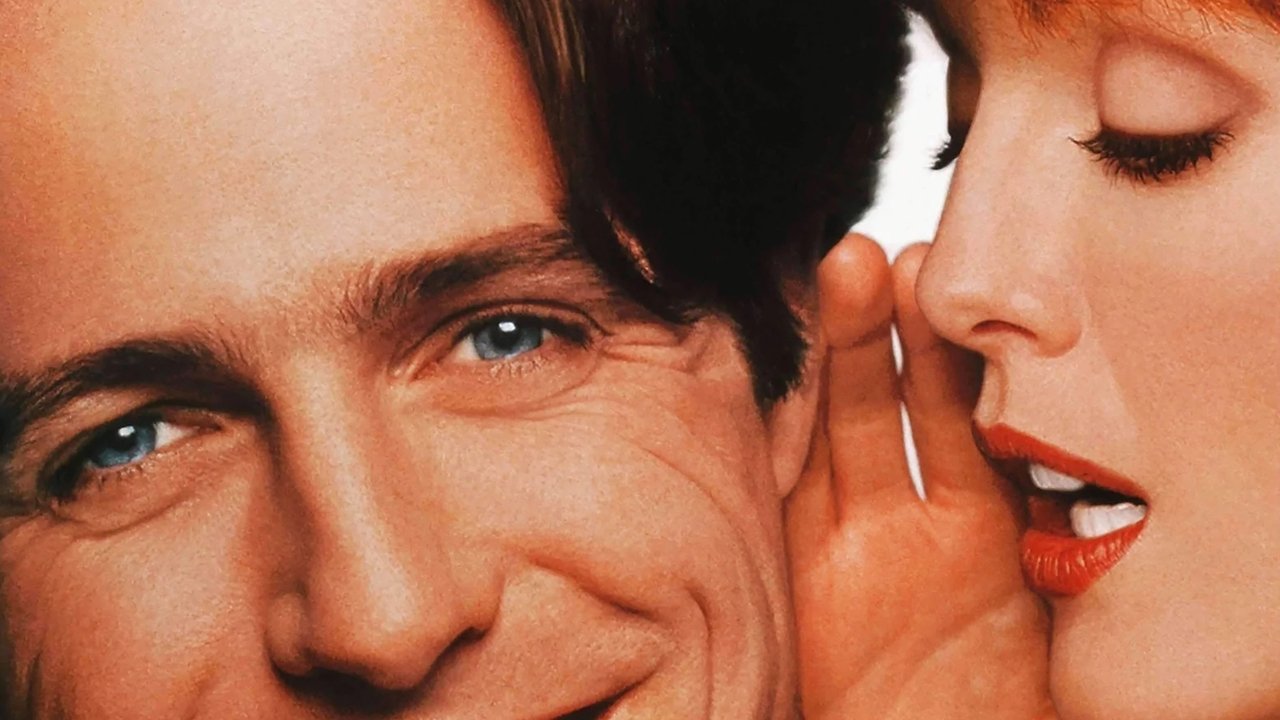
VHS Heaven Rating: 6.5 / 10
Justification: The rating reflects the film's undeniable 90s charm, Hugh Grant's perfect casting for the role, Julianne Moore's grounding presence, and the sheer comedic explosion of Robin Williams' cameo. Points are docked for the sometimes overly broad humor (looking at you, Dwyers!), the fairly predictable plot beats inherent in its rom-com formula, and the fact that it doesn't quite reach the comedic heights of Columbus's best work. It's comfortable, funny in spots, and incredibly nostalgic, but not a stone-cold classic.
Final Thought: Nine Months is pure 90s video store comfort food – slick, predictable, but elevated by its cast and that unforgettable doctor's visit. It perfectly captures that specific brand of pre-parenthood panic comedy that feels both dated and endearingly familiar. Worth a revisit? Absolutely, especially if you need a dose of floppy-haired anxiety and a reminder of Williams' singular genius.
You Might Also Enjoy
Only the Lonely
1991
Runaway Bride
1999
Four Weddings and a Funeral
1994
The Englishman Who Went Up a Hill But Came Down a Mountain
1995
Crystal Moon
1990
Don't Tell Her It's Me
1990
Doc Hollywood
1991
He Said, She Said
1991
Mannequin Two: On the Move
1991
Boomerang
1992
Love Potion No. 9
1992
Maledetto il giorno che t'ho incontrato
1992
Singles
1992
The Cutting Edge
1992