Geri's Game
Ah, the humble opening act. Before the main feature roared to life on our trusty VCRs (or sometimes, if we were lucky, on the big screen!), there was often a delightful little morsel – the animated short. And in the late 90s, one particular short signalled a giant leap forward, a charming duel played out not just on a chessboard, but on the cutting edge of computer animation. I’m talking, of course, about Pixar’s 1997 masterpiece, Geri's Game.
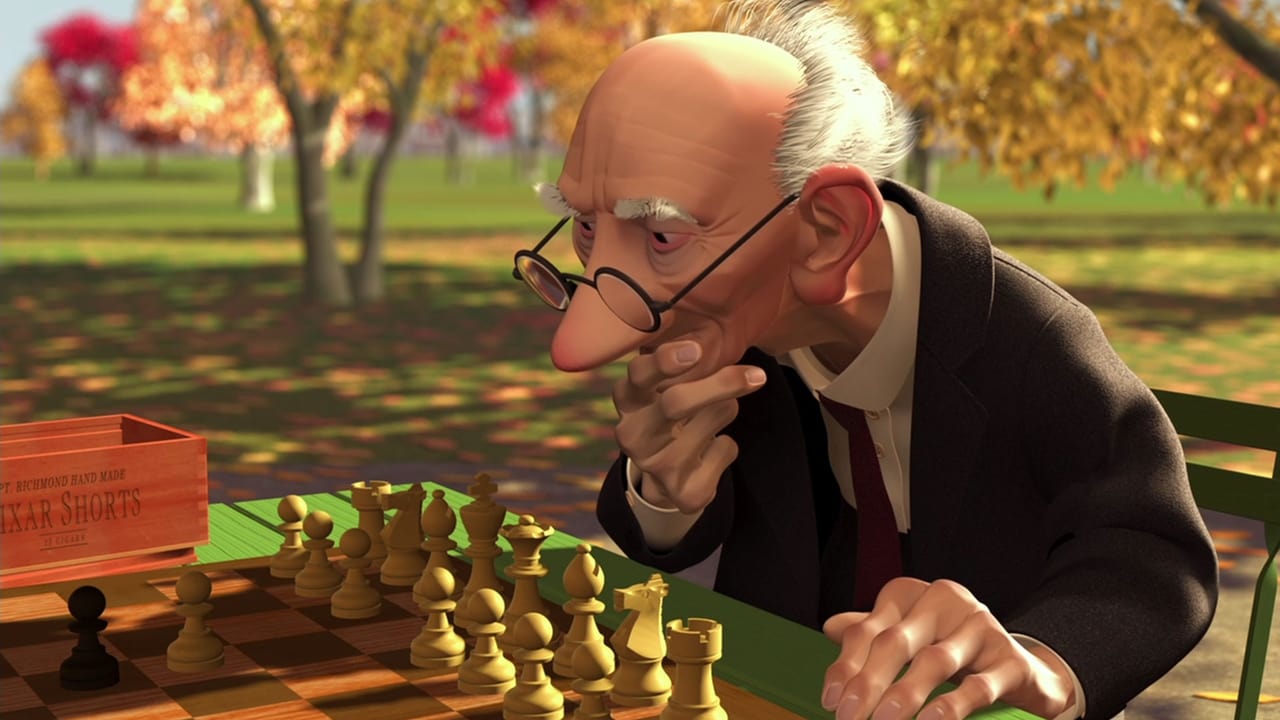
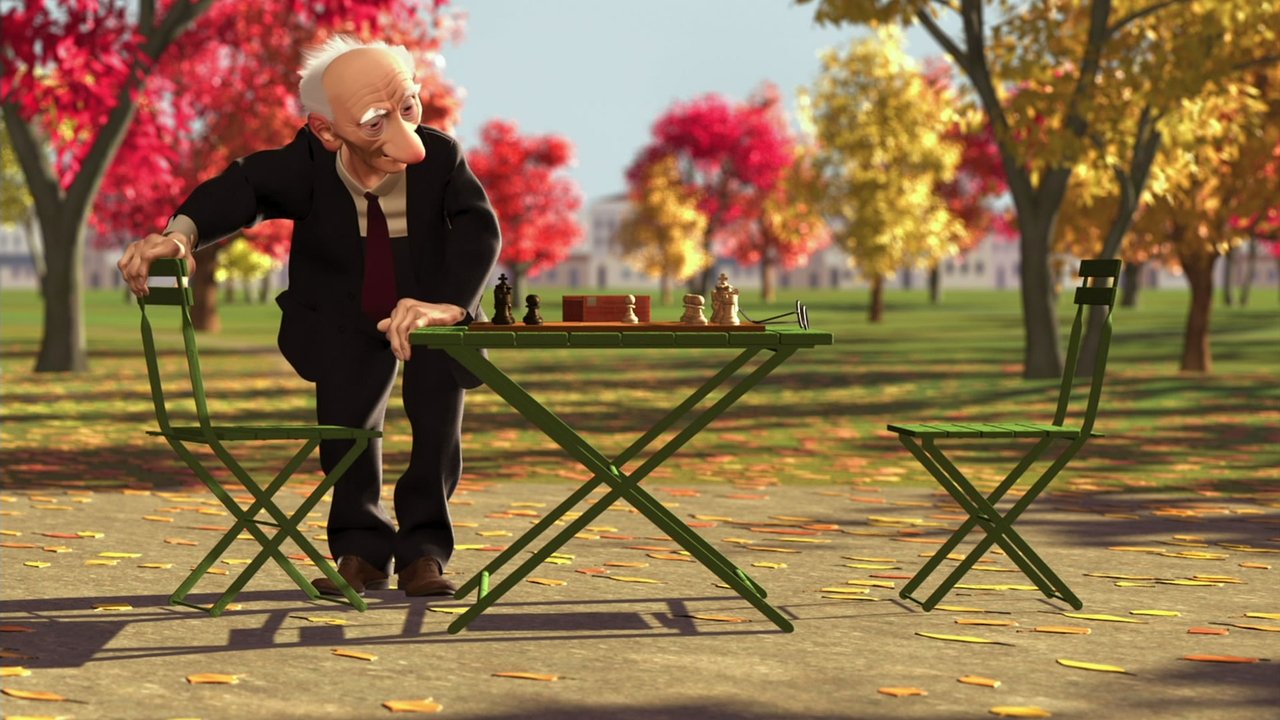
For many of us, Geri's Game likely first flickered into view just before A Bug's Life (1998) commenced its own miniature epic. It felt like a bonus treat, a meticulously crafted little story that stood entirely on its own. Set against the gentle autumnal hues of an empty park, we meet Geri, a lanky, bespectacled senior citizen settling down for a game of chess. The twist? His opponent is... himself.
A Masterclass in Digital Character
What unfolds is a brilliantly simple, yet captivating concept. As Geri switches seats (and personalities, hilariously shedding his glasses for his "opponent" persona), the game becomes increasingly intense. One Geri is timid and seemingly outmatched; the other is confident, almost smug. The animation conveys this internal conflict with breathtaking subtlety for its time. This wasn't just about moving polygons; it was about performance. Those nuanced facial expressions – a worried frown, a triumphant smirk, the despair of impending checkmate – felt revolutionary. We could feel Geri's frustration and eventual cunning glee, all without him uttering more than a chuckle or a gasp (provided by Pixar stalwart Bob Peterson, who would later voice Dug in Up and Roz in Monsters, Inc.).
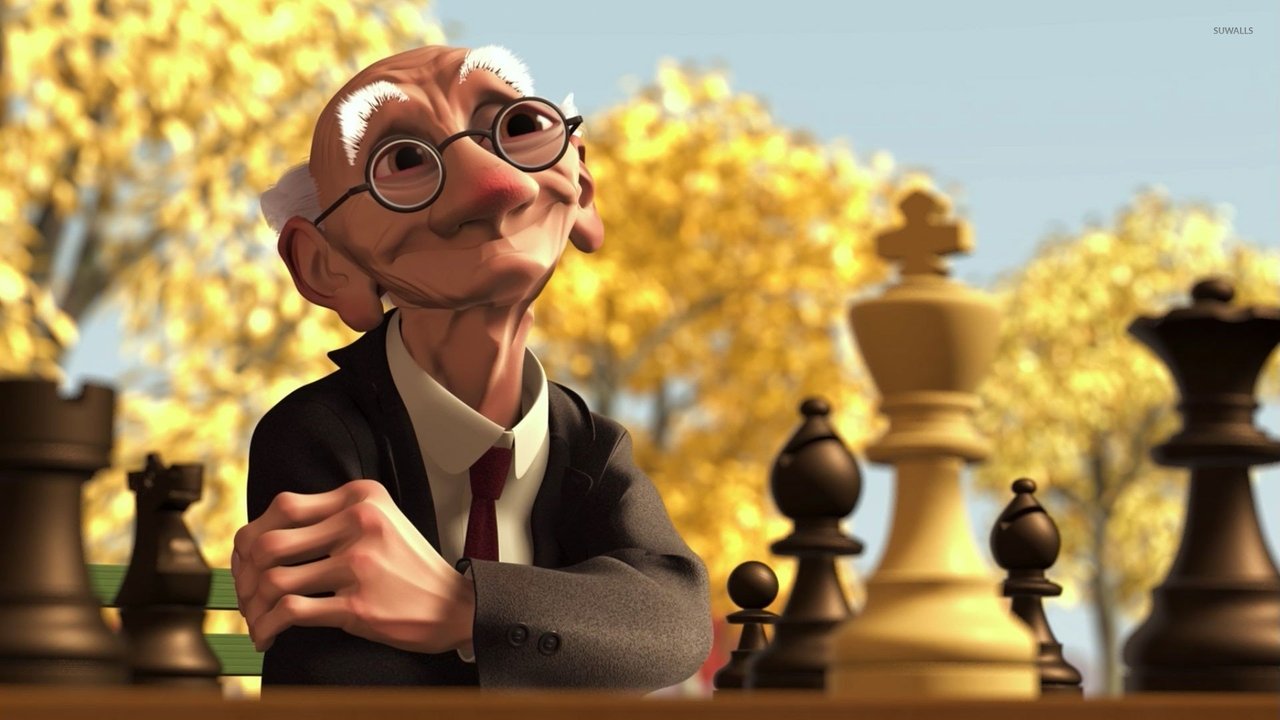
Directed and written by Czech-born animator Jan Pinkava, Geri's Game was more than just a fun interlude. It was Pixar flexing its rapidly developing muscles after the monumental success of Toy Story (1995). The studio took a deliberate step back towards shorts, partly to nurture new talent and push technological boundaries without the pressure of a full feature. And push they did.
Beyond the Pixels: Crafting Geri
Remember how utterly convincing Geri looked? That wasn't easy in 1997. Jan Pinkava and his team tackled two massive challenges: realistic human skin and complex cloth animation. Before Geri's Game, animating the subtle stretch, sag, and texture of skin, or the way fabric folds and drapes, was notoriously difficult in CGI. Pinkava, leveraging techniques partly developed for modeling surfaces, pioneered methods using subdivision surfaces, allowing for organic shapes and smooth animation that gave Geri his distinct, believable (if stylized) appearance. Watching his tweed jacket bunch up or his facial skin crease felt like witnessing digital magic. It's fascinating to think that this five-minute short served as a crucial testbed for technology that would become fundamental to later Pixar features.
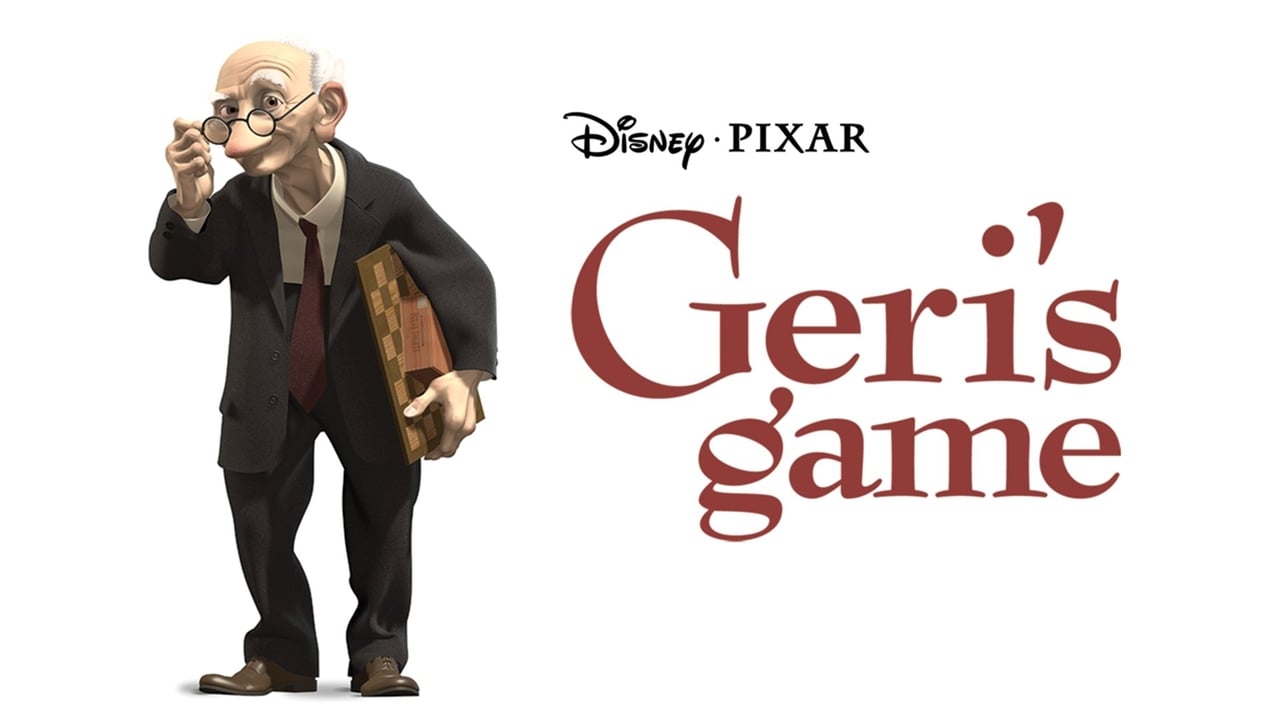
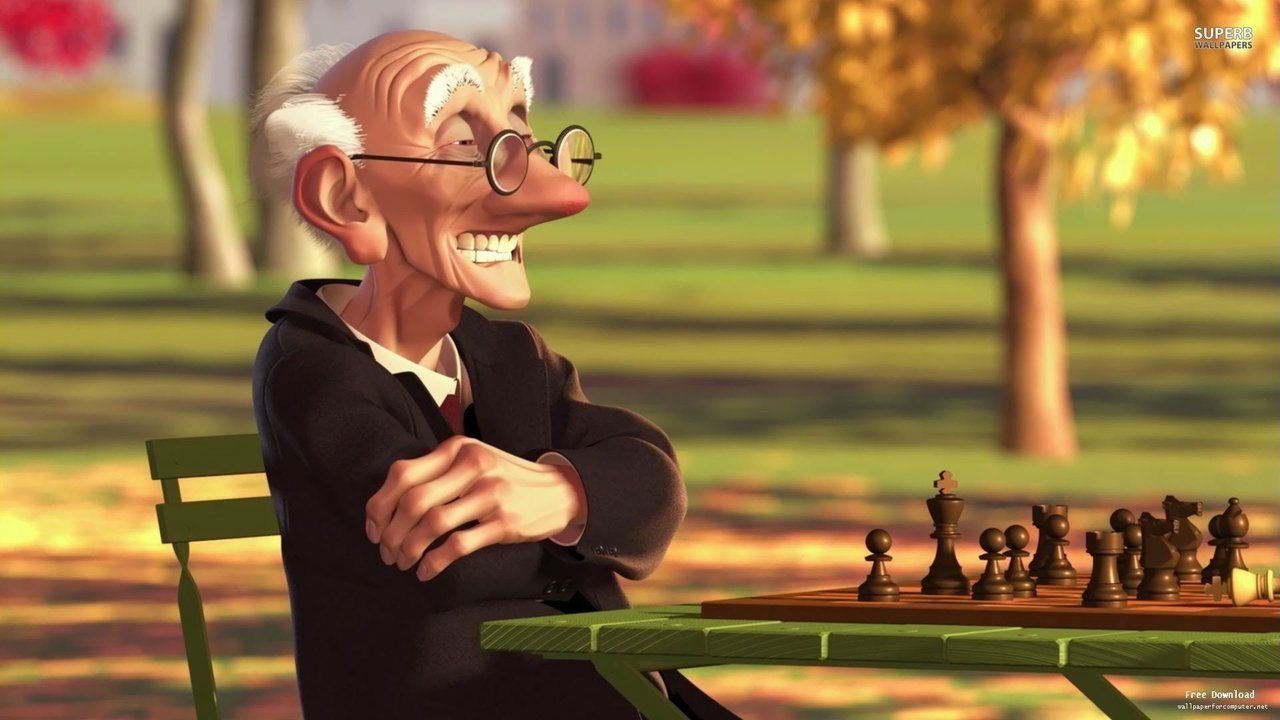
The attention to detail is just lovely. The scattered autumn leaves, the wooden texture of the chessboard, the glint of light on Geri's glasses – it all contributes to a tangible sense of place. There's a quiet melancholy about the scene, an old man finding companionship in his own wit, that adds a layer of unexpected depth. It’s funny, yes, but also quite poignant.
Legacy in Five Minutes
Geri's Game didn't just impress audiences; it wowed the Academy, snagging the Oscar for Best Animated Short Film in 1998. This win reaffirmed Pixar's storytelling prowess and technical ingenuity beyond the realm of talking toys. It proved they could evoke genuine emotion and character complexity within the tight constraints of a short, and importantly, with a human protagonist.
And Geri himself? Well, he wasn't quite done. Sharp-eyed viewers likely spotted him a couple of years later, meticulously restoring Woody in Toy Story 2 (1999). It was a delightful Easter egg, a nod to the studio's growing history and a testament to the character's memorable design. This short marked Pixar's confident return to the format that started it all, paving the way for a steady stream of beloved shorts that continue to accompany their features. It wasn't just a game of chess; it was a strategic move that showcased Pixar's artistry and technical ambition, proving they were playing on a whole different level.
VHS Heaven Rating: 9/10
Geri's Game is a near-perfect animated short. Its technical breakthroughs in human modeling and cloth simulation were groundbreaking for 1997, wrapped in a story that's clever, funny, and surprisingly touching. It achieves so much character and emotion in under five minutes, relying almost entirely on visual storytelling. It loses a single point only because, viewed today, some aspects of the CGI have inevitably aged (though remarkably well!), but its charm and historical significance in the animation world are undeniable.
It remains a masterstroke of digital artistry, a reminder that sometimes the most compelling contests are the ones we play against ourselves, especially if it means winning a set of false teeth. A true gem from the dawn of Pixar's golden age.
You Might Also Enjoy
It's Christmastime Again, Charlie Brown
1992
Porco Rosso
1992
Tiny Toon Adventures: How I Spent My Vacation
1992
Tom and Jerry: The Movie
1992
The Wrong Trousers
1993
A Flintstones Christmas Carol
1994
Asterix Conquers America
1994
A Goofy Movie
1995
The Pebble and the Penguin
1995
Toy Story
1995
A Close Shave
1996
Around the World With Timon & Pumbaa
1996
Space Jam
1996
Cats Don't Dance
1997