Hikers
It often begins with an escape, doesn't it? The allure of leaving the city hum, the deadlines, the familiar four walls behind for the promise of rugged beauty and fresh air. But what happens when the baggage we carry isn't just in our backpacks? Philippe Harel’s 1997 film Hikers (Les Randonneurs) lures us in with the premise of a scenic Corsican trek shared by a group of Parisian friends, but swiftly unpacks something far more complex: the messy, awkward, and often poignant reality of human relationships stripped bare by proximity and physical exertion. This isn't just a holiday postcard; it's an acutely observed study of middle-class dissatisfaction set against a landscape that remains magnificently indifferent to their petty squabbles and simmering desires.
The Long Walk Towards Ourselves
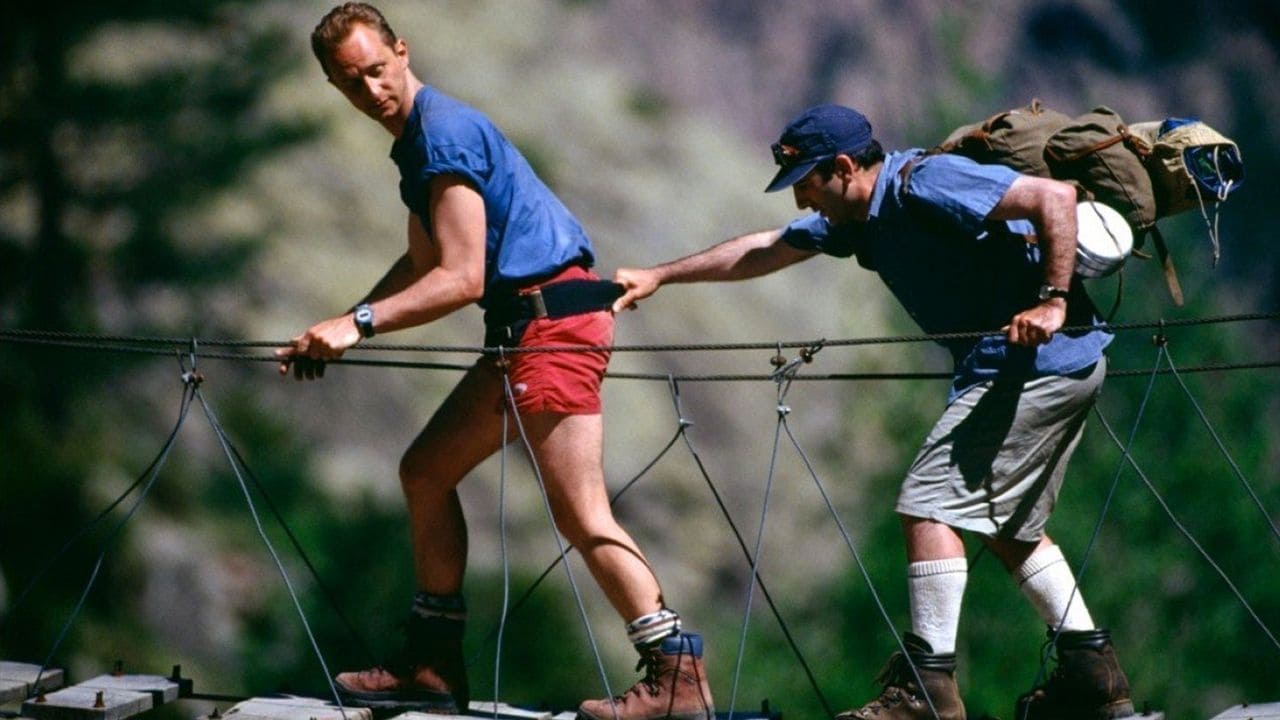
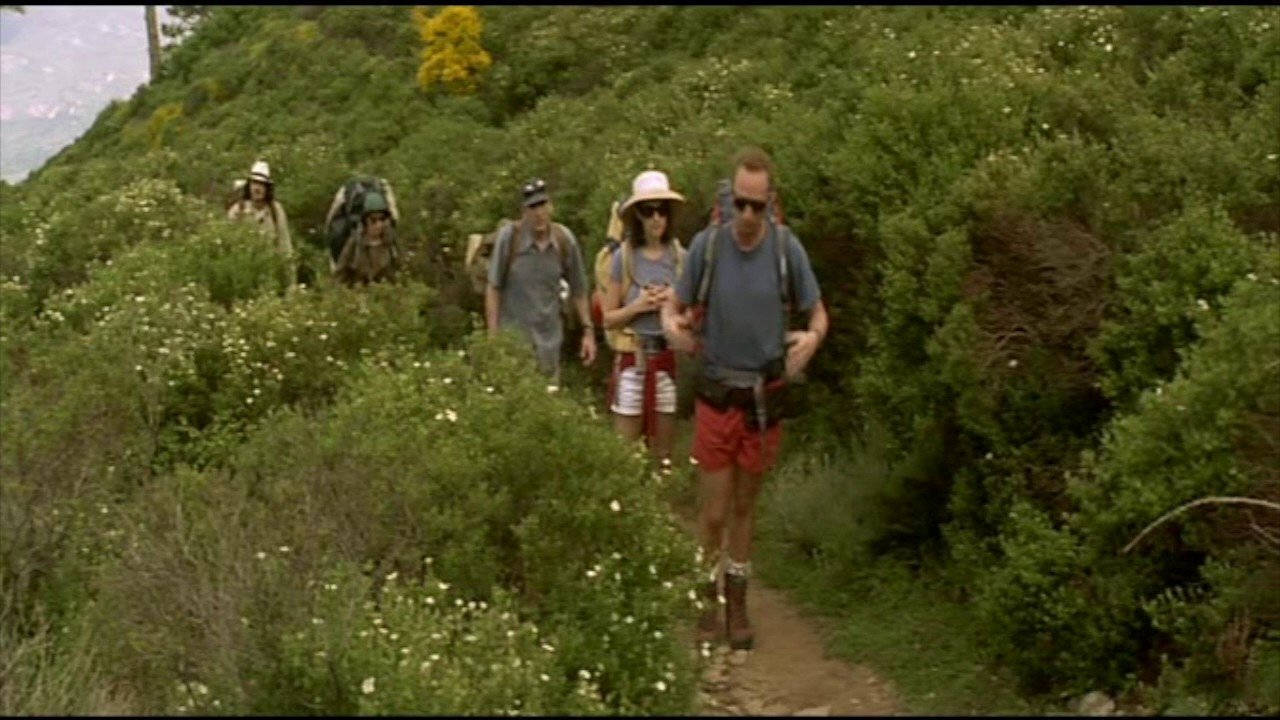
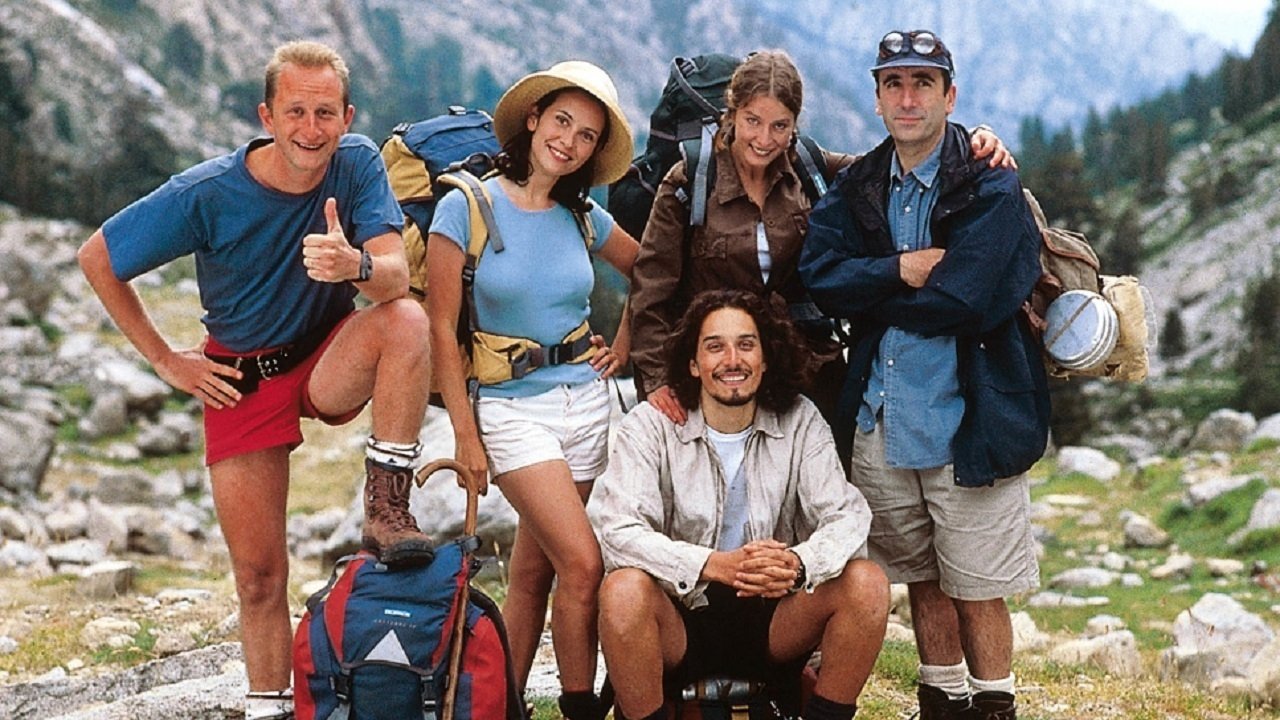
The setup is deceptively simple. Five individuals embark on Corsica’s notoriously challenging GR 20 hiking trail: the perpetually complaining, attention-seeking Éric (Benoît Poelvoorde); the quietly frustrated Nadine (Karin Viard), who harbours unspoken feelings; the younger, more impulsive Mathis (Vincent Elbaz); the seemingly level-headed Cora (Géraldine Pailhas); and their guide for this ill-matched expedition, Louis (Philippe Harel himself). What unfolds isn't a tale of grand adventure or profound bonding, but rather a series of vignettes exposing the cracks in their relationships, their personal insecurities, and the gulf between who they are and who they wish they were. The stunning vistas are ever-present, yet the focus remains squarely on the internal landscapes, often far rockier than the terrain underfoot.
Characters Under Pressure
What elevates Hikers beyond a mere travelogue of discontent is the raw authenticity of its characters and the performances that bring them to life. Benoît Poelvoorde, already known for his intense, often unsettling screen presence (think 1992's notorious Man Bites Dog), is perfectly cast as Éric. He’s grating, self-absorbed, prone to childish outbursts, yet Poelvoorde imbues him with a pathetic vulnerability that prevents him from becoming entirely monstrous. You might not like Éric, but you understand his deep-seated need for validation. Karin Viard, in a role that feels like a precursor to many of her later nuanced portrayals of complex women, is exceptional as Nadine. Her performance is a masterclass in conveying simmering resentment and unspoken longing through subtle glances and weary sighs. The dynamic between her and Poelvoorde crackles with uncomfortable energy. Vincent Elbaz provides a contrasting youthful swagger as Mathis, whose romantic pursuits add another layer of complication, while Philippe Harel’s Louis serves as the often bewildered, slightly melancholic observer – a fitting role for the director navigating his own creation.
More Than Just a Walk in the Park
Harel's direction is key to the film's particular flavour. He employs a naturalistic style, allowing the conversations – often overlapping, sometimes banal, occasionally cutting – to feel spontaneous. The camera captures the breathtaking beauty of Corsica, but resists romanticizing it. Instead, the landscape often serves as an ironic counterpoint to the characters' internal turmoil. The vast, open spaces seem only to amplify their feelings of confinement within their own lives and relationships. The pacing mirrors the hike itself – stretches of quiet contemplation punctuated by bursts of conflict or strained attempts at connection. There’s little traditional plot momentum; the journey is the story, a slow unravelling of facades under the Mediterranean sun.

From Corsican Trails to Box Office Success
It's perhaps surprising, given its often bittersweet and observational tone, that Hikers struck such a chord upon release. This wasn't some obscure arthouse film; it was a significant box office success in France, pulling in over 1.5 million viewers. It clearly tapped into something relatable for French audiences at the time – perhaps that specific blend of everyday frustration, unspoken desires, and the dark humour found in shared discomfort. Its success cemented it as something of a cultural touchstone there, even if it remains lesser-known internationally.
Interestingly, Philippe Harel casting himself as the group's guide wasn't just a director cameo; Louis is a fully-fledged character, often caught in the crossfire of the others' tensions. One wonders how directing oneself within such an ensemble, focused on interpersonal dynamics, influenced the atmosphere on set. Did it blur the lines between observer and participant in a way that mirrored the film's own themes?
The film’s success inevitably led to a sequel over a decade later, Les Randonneurs à Saint-Tropez (2008), which reunited the main cast. While sequels often try to recapture lightning in a bottle, reports suggest it struggled to replicate the unique, bittersweet alchemy of the original's Corsican setting and character-driven focus, perhaps proving that the magic lay specifically in that first, uncomfortable journey.
The Uneasy Truths We Carry
Why does a film about largely unsympathetic people bickering on holiday continue to hold a certain power? Perhaps it’s because Hikers dares to present relationships and personal dissatisfaction without easy answers or neat resolutions. It acknowledges the petty grievances, the passive aggression, the moments of connection that flare up and just as quickly fade. It reflects that uncomfortable truth that sometimes, changing your scenery doesn't change you. The anxieties about aging, commitment, and purpose that bubble up amongst the hikers feel timeless, even if the specific cultural context is late-90s France. What lingers isn't the beauty of the landscapes, but the poignant, often funny, sometimes painful recognition of our own flawed humanity mirrored in these characters. It asks us, perhaps, how much of our own baggage we carry, even when we think we're getting away from it all.
Rating: 7/10
Hikers earns a solid 7 for its unflinching honesty and superb ensemble cast. The performances, particularly from Poelvoorde and Viard, are deeply convincing, capturing the uncomfortable comedy and underlying pathos of their characters. Harel's direction effectively uses the setting to amplify the internal drama, creating a unique blend of observational humour and melancholic reflection. Its strength lies in its commitment to character study over conventional plot, though this very quality – its sometimes meandering pace and focus on flawed individuals – might test the patience of some viewers expecting a lighter, more conventional comedy. It avoids easy sentimentality, which is commendable but also contributes to its bittersweet aftertaste.
Final Thought: More than just a trek through Corsica, Hikers is a surprisingly resonant journey into the messy terrain of the human heart, a reminder found on a dusty VHS tape that sometimes the most challenging landscapes are the ones within ourselves.
You Might Also Enjoy
Shanghai Surprise
1986
The Electric Horseman
1979
The Stunt Man
1980
Honeymoon in Vegas
1992
Cool Runnings
1993
Baby's Day Out
1994
Camp Nowhere
1994
City Slickers II: The Legend of Curly's Gold
1994
Little Indian, Big City
1994
Maverick
1994
North
1994
The Return of Jafar
1994
Trapped in Paradise
1994
A Goofy Movie
1995