Lawn Dogs
Sometimes, a film doesn't announce itself with fanfare. It creeps up on you, settles under your skin, and lingers long after the VCR whirs to a stop. Lawn Dogs (1997) is precisely that kind of movie – a disquieting, strangely beautiful fable tucked away on the video store shelf, easily mistaken for something simpler than it is. It arrived near the end of the VHS era's peak, a challenging indie piece that felt worlds away from the mainstream blockbusters surrounding it. What unfolds is less a comforting story and more a sharp, observant look at the cracks beneath the polished veneer of suburban life.
Beyond the Picket Fence
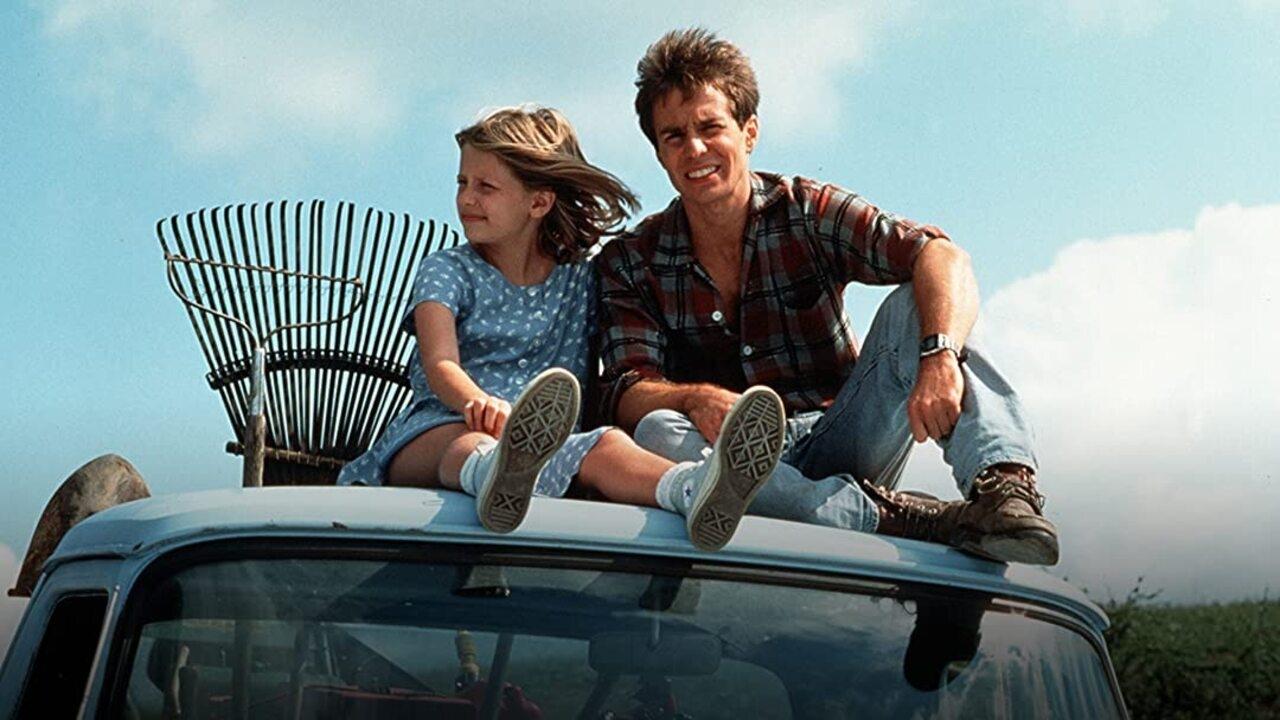
The film immediately establishes a world of stark contrasts. We enter Camelot Gardens, a pristine, suffocatingly perfect gated community in Kentucky. It’s all manicured lawns, identical houses, and brittle smiles – a landscape of enforced conformity. Inside lives ten-year-old Devon Stockard (Mischa Barton), a bright, imaginative, and profoundly lonely girl, alienated from her peers and misunderstood by her social-climbing parents (a perfectly cast Christopher McDonald and Kathleen Quinlan). Her escape comes in the form of Trent Burns (Sam Rockwell), a young man living in a ramshackle trailer just outside the community's walls, making his living mowing their perfect lawns. He represents everything Camelot Gardens excludes: poverty, nature, a certain untamed freedom. Their friendship, born of shared loneliness and mutual curiosity, becomes the film's delicate, beating heart – and its central point of tension.
A Delicate Dance of Performance
What elevates Lawn Dogs beyond a simple tale of forbidden friendship is the astonishing power of its lead performances. Mischa Barton, just ten or eleven during filming, delivers a performance of startling maturity and nuance. Devon isn't merely a cute kid; she possesses an old soul's perceptiveness, observing the adult world's hypocrisies with unnerving clarity. Barton navigates Devon's burgeoning awareness, her fierce loyalty, and her potent imagination with a subtlety that feels utterly authentic. It’s a performance that hints strongly at the talent she would later display, captured here with raw, unpolished honesty. It's no surprise she picked up festival awards for this role; it’s captivating.
Opposite her, Sam Rockwell gives an early showcase of the charismatic vulnerability that would become his signature. Before he was the quirky scene-stealer we know from films like Moon (2009) or Three Billboards Outside Ebbing, Missouri (2017), Rockwell imbues Trent with a quiet dignity and simmering frustration. He’s rough around the edges, certainly, but Rockwell ensures we see the gentle soul beneath, the decent man weary of being judged by his circumstances. The chemistry between Rockwell and Barton is remarkable – entirely platonic, built on shared stories and whispered secrets, yet charged with the danger of societal misinterpretation. Their scenes together feel like finding a hidden clearing in a dark wood.
An Outsider's Eye, A Playwright's Pen
Australian director John Duigan, known for exploring societal boundaries in films like Flirting (1991) and Sirens (1994), brings a crucial outsider's perspective to this slice of American suburbia. He frames Camelot Gardens with a satirical edge, highlighting its artificiality, while capturing the dusty, lived-in reality of Trent’s world with empathy. Duigan masterfully balances the film’s fairy-tale elements – Devon often recites or reads stories that parallel their situation – with the grim realities of class prejudice and suspicion. The atmosphere is thick with unspoken judgment, a low hum of impending trouble that keeps the viewer permanently on edge.
This potent blend owes much to the script by acclaimed playwright Naomi Wallace. Known for her politically charged work, Wallace crafts dialogue that is both naturalistic and insightful, revealing character and theme without resorting to exposition. The screenplay doesn't shy away from the discomfort inherent in Devon and Trent's bond, forcing the audience to confront their own assumptions. It bravely tackles themes of class warfare, the stifling nature of conformity, and the often-brutal transition from childhood innocence to adult awareness.
Retro Fun Facts & Lingering Echoes
Filmed on location in Kentucky, the setting itself becomes a character, the lush but tamed landscapes of Camelot Gardens contrasting sharply with the wilder environs of Trent's trailer park. Lawn Dogs made waves on the festival circuit in 1997, garnering critical praise, particularly for the performances, but its challenging subject matter – the friendship between a young girl and an adult man, however innocent – undoubtedly made it a trickier sell for wider distribution in the late 90s. It’s the kind of film that likely sparked intense discussion among those who sought it out on VHS or caught it on late-night cable, precisely because it refused easy answers. I recall finally tracking down a copy years after its release, drawn in by whispers of Rockwell's compelling early work, and finding something far more complex and moving than I'd anticipated. The title itself is evocative – referring literally to Trent's job, but perhaps also hinting at the residents of Camelot Gardens as territorial, status-obsessed creatures guarding their manicured domains.
The Verdict
Lawn Dogs is not always an easy watch. It's melancholic, unsettling, and deeply critical of the social structures it portrays. Yet, it's also incredibly rewarding. The performances from Mischa Barton and Sam Rockwell are exceptional, capturing a rare and fragile connection with profound sensitivity. John Duigan's direction creates a palpable atmosphere, blending social realism with a touch of dark fairy tale. It’s a film that trusts its audience to navigate moral ambiguity and rewards them with a story of genuine emotional depth. It questions who the real "danger" is – the outsider living honestly, or the insulated community projecting its fears?
Rating: 8/10
Justification: The film excels through its powerhouse performances, particularly from Barton and Rockwell, its sharp script, and its unnerving, well-crafted atmosphere. It tackles difficult themes with intelligence and sensitivity. While its deliberate pacing and ambiguous tone might not appeal to everyone, its strengths make it a standout indie gem from the era.
Final Thought: Decades later, Lawn Dogs remains a potent reminder that the most unsettling monsters often reside not in the woods, but behind the pristine facades of perfectly kept homes. A truly memorable find from the late-night aisles of VHS Heaven.
You Might Also Enjoy
Molly
1999
Time of the Gypsies
1988
Flirting
1991
Radio Flyer
1992
The Secret Garden
1993
The Secret of Roan Inish
1994
A Little Princess
1995
Three Wishes
1995
Whisper of the Heart
1995
FairyTale: A True Story
1997
A Christmas Carol
1999
I Are You, You Am Me
1982
A Christmas Carol
1984
The Boy Who Could Fly
1986