Love and Death on Long Island
It begins, as profound changes often do, quite by accident. A wrong turn into the wrong cinema auditorium, a refuge sought from the rain, introduces the esteemed, technologically phobic British writer Giles De'Ath to a world utterly alien to his own: the puerile American teen comedy Hotpants College II. It’s a moment of cinematic serendipity – or perhaps calamity – that sets the stage for Love and Death on Long Island, a quiet, exquisitely observed film from 1997 that lingers long after the VCR has whirred to a stop. The film doesn't shout; it murmurs its truths about loneliness, obsession, and the surprising places the human heart seeks connection.
An Unexpected Muse
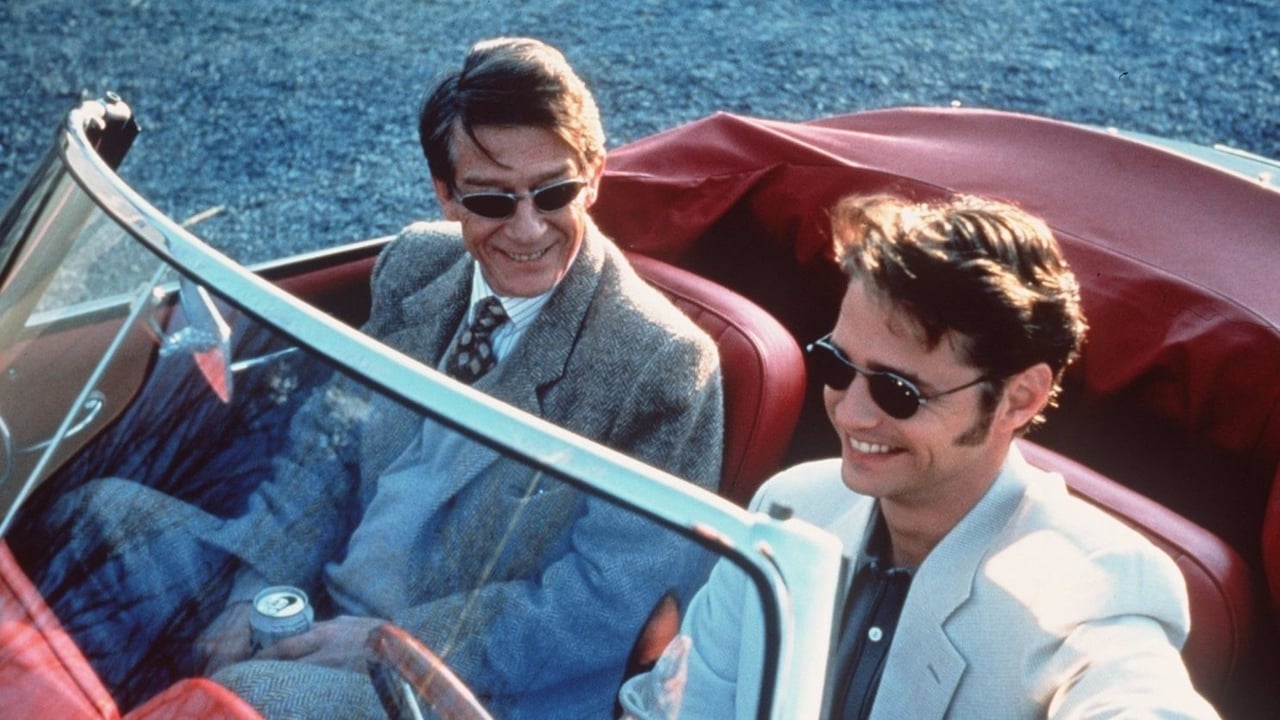
At the film's center is Giles, played with breathtaking precision by the legendary John Hurt. Giles is a man seemingly preserved in amber – a respected author living a life of quiet routine following the death of his wife, surrounded by books, deaf to the rhythms of the modern world. He doesn’t own a television, let alone a VCR. Hurt embodies him perfectly: the precise diction, the slightly stiff posture, the eyes that seem to observe everything with detached intellectual curiosity, until they land on Ronnie Bostock. Ronnie, the young, effortlessly charming American actor starring in Hotpants College II, becomes the improbable catalyst for Giles’s transformation. This wasn't just another role for Hurt, who could convey lifetimes of weariness or mischief with a glance; it was a deep dive into a character whose carefully constructed world begins to fracture, revealing a profound vulnerability beneath the tweedy exterior.
From Curiosity to Compulsion
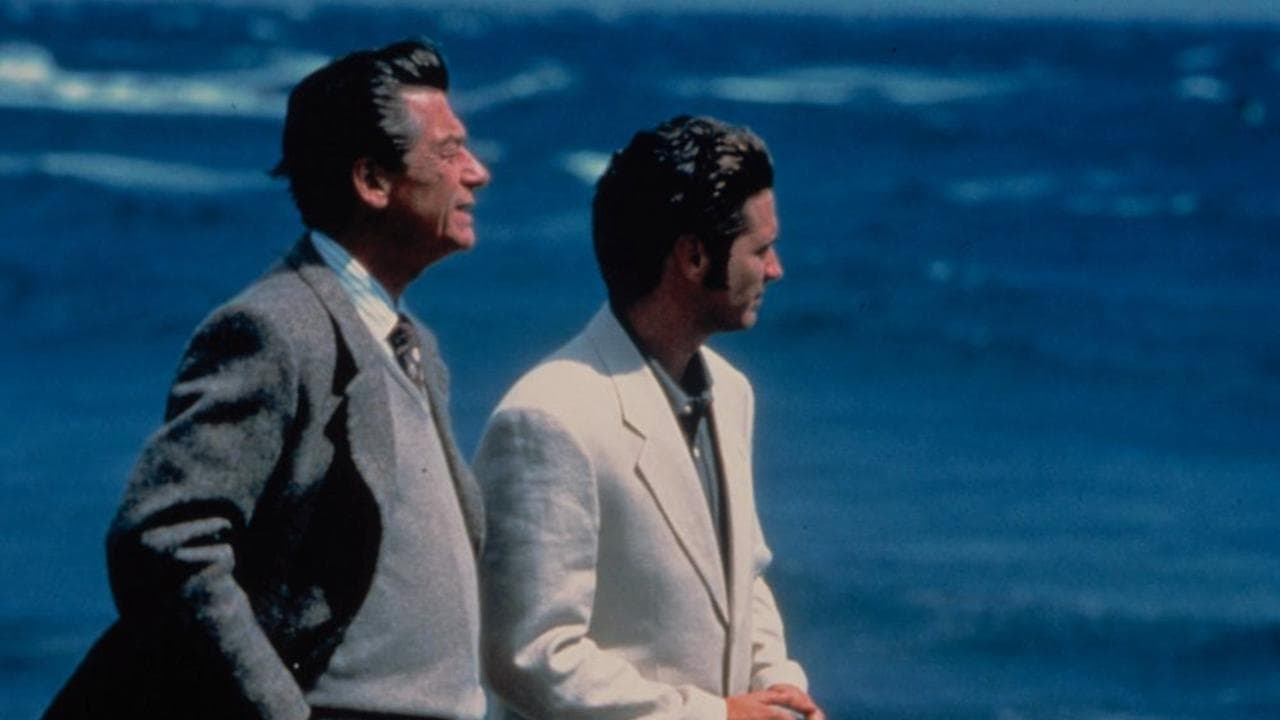
What starts as an almost academic interest – Giles, bewildered by the appeal of such low-brow fare, decides to study this phenomenon named Ronnie Bostock (Jason Priestley) – slowly, meticulously morphs into obsession. He rents Bostock's other films (requiring the purchase of a VCR and TV, navigated with hilarious ineptitude), plasters his study walls with teen magazine clippings, and devours every scrap of information about the young star. Director Richard Kwietniowski, adapting Gilbert Adair’s novel with sensitivity, portrays this descent not with judgment, but with a kind of empathetic fascination. We see the world through Giles's increasingly focused lens. The film wisely avoids simplistic labels; is it repressed desire? A late-life crisis? A desperate grasp for vitality? It’s likely a complex tapestry woven from all these threads, and the film allows us to ponder the ambiguity.
The Idol and the Ingenue
Playing the object of this intense fixation couldn't have been easy, but Jason Priestley, then primarily known as the heartthrob Brandon Walsh from Beverly Hills, 90210, turns in a remarkably effective performance. He wisely doesn't try to make Ronnie Bostock a figure of hidden depths. Instead, he embodies the pleasant, slightly vacuous charm of a young star navigating sudden fame with a degree of naive good nature. It’s crucial that Ronnie remains largely oblivious to the intensity of Giles’s feelings for much of the film. Priestley actively sought roles like this to move beyond his teen idol image, and his casting here adds a layer of meta-commentary. It feels authentic because, in a way, Priestley was Ronnie Bostock to millions, making Giles’s fascination with his public persona all the more believable.
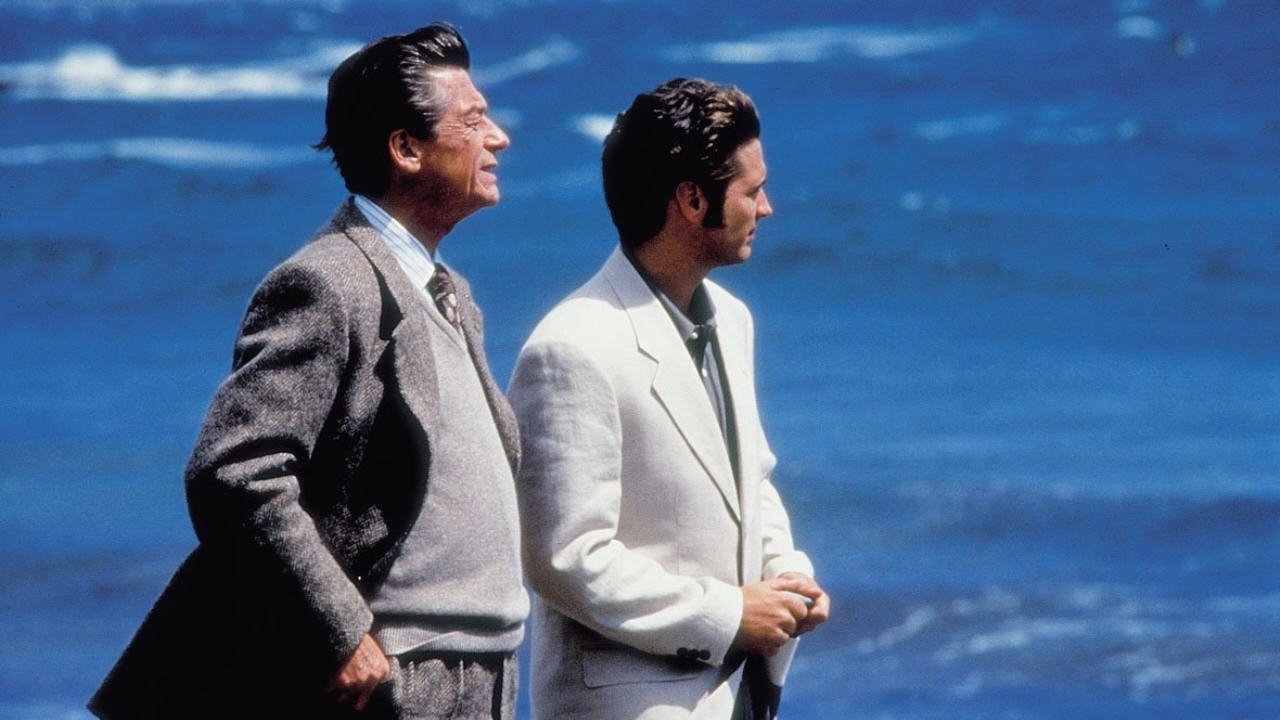
Retro Fun Facts: Kwietniowski specifically created the hilariously accurate Hotpants College II clips for the film, aiming for something perfectly generic yet utterly convincing as the kind of fluff Giles would stumble upon. Finding the right tone was key; it had to be bad, but not so bad it broke the film's reality. And speaking of reality, while set on Long Island, much of Ronnie's world was actually filmed in Nova Scotia, Canada – a common practice for independent films seeking to stretch their modest budgets (this one reportedly cost around $2.5 million).
A Quiet Craft
The film's power lies in its restraint. Kwietniowski employs a subtle, observant style. The contrast between Giles's dimly lit, book-lined London flat and the bright, sunny openness of suburban Long Island is beautifully rendered. The score is used sparingly, allowing Hurt's performance and the carefully crafted dialogue to carry the emotional weight. It’s a film built on nuances – a lingering look, an awkward pause, the way Giles meticulously catalogues Ronnie’s mediocre filmography as if they were lost works of Shakespeare. This thoughtful approach garnered critical acclaim, particularly for Hurt, and the film became a bit of a darling on the festival circuit, finding an audience that appreciated its intelligence and quiet pathos, a stark contrast to the louder cinematic fare of the late 90s. Seeing it again now, perhaps on a well-worn tape pulled from the shelf, reminds me of the joy of discovering these smaller, character-driven gems tucked away in the video store's drama section.
The Echo of Longing
Love and Death on Long Island isn't a film about grand pronouncements or dramatic confrontations. It’s about the quiet ache of loneliness and the sometimes misguided ways we try to soothe it. It questions the nature of fandom, the lines between admiration and obsession, and the vast, often unbridgeable gap between the life we live and the life we imagine. Does Giles truly see Ronnie, or only the projection of his own needs and desires? The film leaves you pondering this, and the bittersweet humanity of Giles’s journey.
Rating: 8/10
This score is earned primarily through John Hurt's masterful, deeply empathetic performance, which anchors the entire film. Coupled with Richard Kwietniowski’s intelligent, sensitive direction and a script that explores complex themes with nuance and subtlety, it makes for a compelling character study. While Jason Priestley effectively embodies the object of obsession, the film rightly keeps the focus squarely on Giles's internal landscape. It's a small film with a quiet voice, but its insights into the human condition resonate profoundly.
It leaves you contemplating the strange paths obsession can carve, and the poignant, sometimes painful, ways we reach for connection across the voids in our lives.
You Might Also Enjoy
Smoking / No Smoking
1993
The Thing Called Love
1993
Chungking Express
1994
Eat Drink Man Woman
1994
Even Cowgirls Get the Blues
1994
Forrest Gump
1994
Sleep with Me
1994
The Postman
1994
The Sum of Us
1994
Rendezvous in Paris
1995
The Flower of My Secret
1995
Brassed Off
1996
Mrs. Winterbourne
1996
My Sex Life... or How I Got Into an Argument
1996