Asini
Okay, fellow travellers through the magnetic tape archives! Pull up a comfy chair, maybe crack open a beverage that reminds you of simpler times. Tonight, we're dusting off a curious little number from the tail end of the 90s, one you likely wouldn't have found easily at Blockbuster unless you had a particularly adventurous manager or lived near a specialist store. It’s Asini (1999), an Italian comedy that feels like a slightly different beat from the era's usual rhythm.
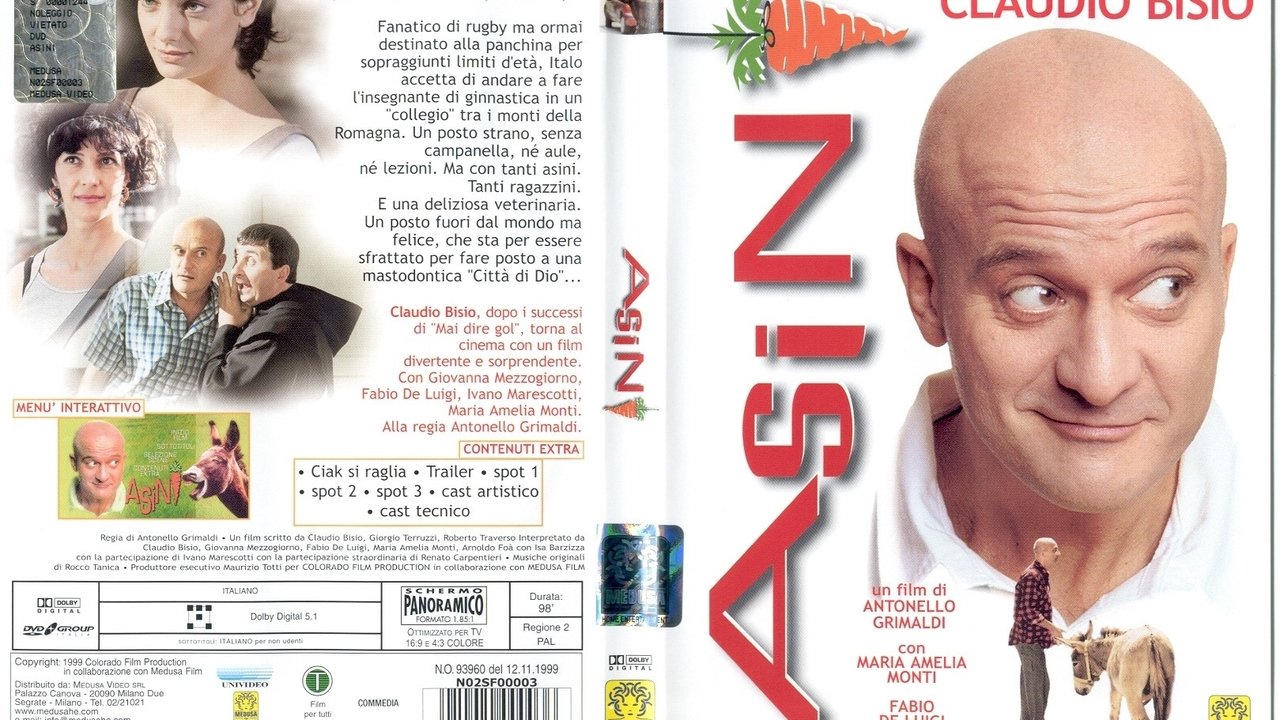
Faded Star, Stubborn Village
Imagine the scene: a once-famous rock star, Italo (played by Italian comedy stalwart Jerry Calà, who also co-wrote the script), finds his glitter fading. The roar of the crowd has dwindled to the echo in empty arenas. Broke and adrift, he washes up in perhaps the last place you'd expect – the tiny, remote mountain village of Nemi (though filmed primarily in the scenic Rocca Canterano, Lazio). His gig? Teaching music to the local kids. The catch? The village is populated almost entirely by the elderly... and a surprising number of donkeys (hence the title, Asini). It's a premise ripe for fish-out-of-water comedy, but there's a melancholic undertow here that sets it apart.
Calà Tries a Different Tune
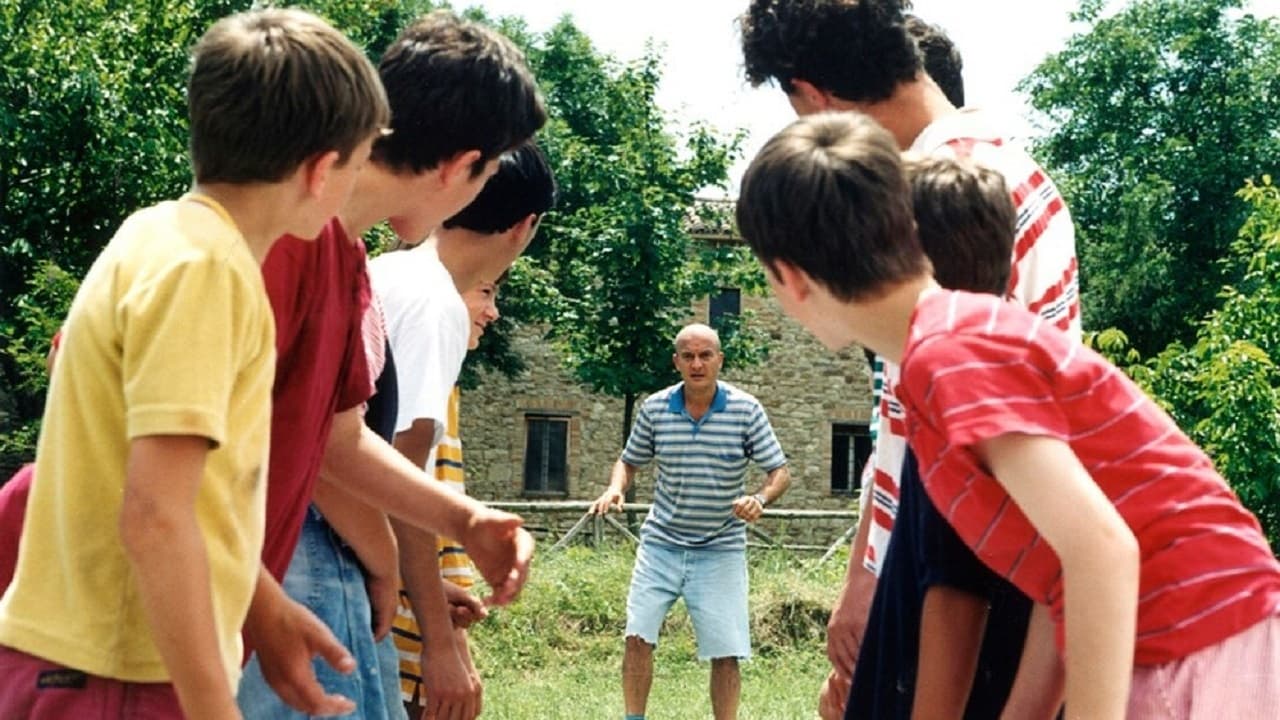
For anyone familiar with Jerry Calà from his numerous 80s and 90s hits – often brash, fast-talking comedies, sometimes bordering on the chaotic energy of the cinepanettone holiday films – Asini feels like a conscious shift. Calà, working with seasoned comedy writers Gino Vignali and Michele Mozzati (the duo known as Gino & Michele), seems to be aiming for something more character-driven, maybe even poignant. His Italo still has flashes of the old swagger, the reflexive womanizing, the desperate clinging to past glories (that slightly tragic leather jacket feels symbolic). But there's a weariness, a vulnerability peeking through. It's not always a perfect fit; moments of broader comedy sometimes clash with the quieter, more reflective tone director Antonello Grimaldi (who would later direct the acclaimed Caos Calmo) tries to establish. Still, seeing Calà stretch, even slightly, beyond his usual persona is intriguing. Was this a bid for a different kind of longevity as the millennium approached?
Mountain Air and Acting Chops
The film benefits greatly from its supporting cast, particularly Claudio Amendola as Mariano, the stern, traditionalist mayor (and veterinarian!). Amendola, often known for tougher, dramatic roles (Soldati - 365 all'alba, Ultrà), brings a grounded presence that plays nicely against Calà's fading rock star energy. Their dynamic, the clash between Italo's disruptive modern sensibilities and Mariano's deep-rooted village ways, forms the core conflict. It’s less about outright hostility and more about mutual suspicion and grudging respect slowly forming. There's also a nice bit of nostalgic casting with Franco Oppini (another co-writer) appearing; Oppini and Calà were famously part of the comedy troupe "I Gatti di Vicolo Miracoli" back in the 70s and 80s, adding a little layer for Italian audiences who grew up with them.
Retro Fun Facts: It's worth noting Calà's direct involvement in the script; this feels like a personal project, an attempt to grapple with themes of aging, relevance, and finding meaning after the spotlight dims – themes perhaps resonant for an actor whose peak fame was tied to a specific era. While not a box office smash in Italy (reports suggest a modest gross), it represented a different flavour in the landscape of late 90s Italian comedies. And yes, there are plenty of actual donkeys on screen – one imagines the wrangling added a unique challenge to the production in the picturesque but likely logistically tricky mountain locations. Did Calà actually write the "hit song" his character clings to? Details are scarce, but it adds to the character's faded authenticity.
Finding Harmony in the Hills?
Asini isn't a laugh-a-minute riot. Its humour is gentler, more situational, often stemming from the absurdity of Italo's predicament and his interactions with the quirky, stoic villagers. Grimaldi’s direction emphasizes the beauty and isolation of the mountain setting, using the landscape almost as another character. The cinematography captures that crisp mountain air feel, contrasting nicely with the imagined sweaty rock gigs of Italo's past. The film asks quiet questions: Can someone truly reinvent themselves? Can disparate worlds find common ground? Does community hold the key to individual redemption? It doesn’t always provide profound answers, and the plot sometimes meanders, relying perhaps a bit too heavily on familiar tropes (the eventual thawing of the stubborn locals, the potential love interest).
Yet, there's a certain charm to its low-key ambition. Watching it feels like discovering a forgotten B-side from a favourite band – maybe not the chart-topper, but possessing a unique melody and a heartfelt quality. It’s a film about finding your rhythm again, even if it’s syncopated with the braying of donkeys. For those of us who remember scouring video store shelves for something beyond the mainstream, Asini represents that kind of find – imperfect, perhaps a little dusty, but with a genuine soul.
Rating: 6/10
Justification: While the pacing can be uneven and some comedic elements feel underdeveloped, Asini earns points for its heartfelt premise, Jerry Calà's willingness to explore a more vulnerable character, Claudio Amendola's solid presence, and the charmingly melancholic atmosphere. It's a gentle, character-focused Italian comedy that tries for something slightly different, even if it doesn't quite reach soaring heights.
Final Thought: In the vast catalogue of 90s comedies, Asini is a quiet entry, a reminder that sometimes the most interesting stories are found not in the roar of the crowd, but in the quiet dignity of finding purpose in unexpected places... even among donkeys.
You Might Also Enjoy
Chicken Park
1996
The Heroes
1994
Il barbiere di Rio
1996
A Walk in Time - The Adventure Continues
1997
Suntanned
1991
Suntanned: One Year Later
1993
00 Schneider - Jagd auf Nihil Baxter
1994
3 Ninjas Kick Back
1994
A Chinese Torture Chamber Story
1994
A Flintstones Christmas Carol
1994
A Low Down Dirty Shame
1994
A Simple Twist of Fate
1994
Ace Ventura: Pet Detective
1994
Airheads
1994