Black and White
There's a certain kind of nervous energy that crackles off some films from the late 90s, a feeling of boundaries being pushed, sometimes clumsily, sometimes with raw power. James Toback’s Black and White (1999) practically vibrates with this energy. Watching it again after all these years feels less like revisiting a movie and more like stepping back into a specific, messy, and often uncomfortable cultural moment captured on celluloid, like finding a slightly damaged Polaroid from a wild party you only vaguely remember attending. It’s not a film easily loved, perhaps not even easily liked, but its ambition and raw edges leave a distinct impression.

New York Stories, Tangled Threads
Black and White doesn’t really have a single plot; instead, it throws a tangle of storylines against the backdrop of late 90s New York City, all loosely orbiting the collision points between white fascination with black culture, particularly hip-hop, and the lives of those within that culture. We follow a pair of documentary filmmakers, Sam (Brooke Shields) and her morally ambiguous partner Terry (Robert Downey Jr.), as they chronicle the lives of privileged white teens (like Bijou Phillips' Charlie) immersing themselves in the world of rappers like Rich Bower (Power, of the Wu-Tang Clan). Elsewhere, a promising black basketball star, Dean (Allan Houston, the actual Knicks player), navigates temptations and pressures, while his friend Muggs (Mike Tyson, essentially playing himself) offers unsettling warnings. Add in cops (Ben Stiller!), record executives, lovers, and hangers-on, and you get a sprawling, chaotic canvas.
Toback's Improvised Edge
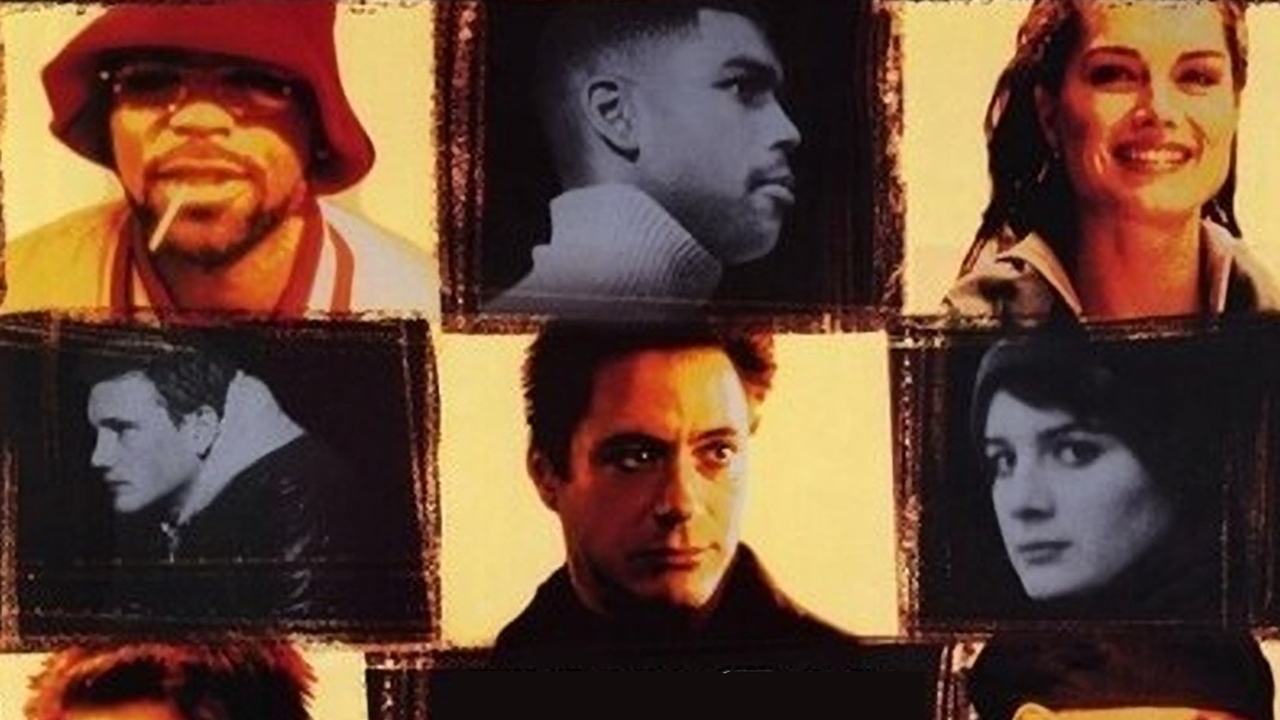
This structural looseness feels entirely deliberate, a hallmark of writer-director James Toback, known for films like Fingers (1978) and his later documentary Tyson (2008). Black and White leans heavily into improvisation, giving many scenes an unpredictable, almost dangerous feel. The dialogue often sounds startlingly real, sometimes uncomfortably so, blurring the lines between character and actor. This approach, captured with gritty, handheld immediacy by cinematographer David Ferrara, grants the film moments of undeniable authenticity, but it also contributes to its unevenness. Sometimes the raw energy ignites the screen; other times, it meanders or feels exploitative. It’s a high-wire act, and Toback doesn’t always maintain his balance.
Faces in the Crowd
The sprawling cast is one of the film’s most fascinating aspects, a snapshot of talent both established and emerging, professional and non-professional. Seeing NBA star Allan Houston navigate dramatic scenes alongside seasoned actors is intriguing in itself. The members of the Wu-Tang Clan (Power, Raekwon, Inspectah Deck, and the late O.D.B.) bring an undeniable presence, grounding the film's exploration of hip-hop culture in reality, even as they perform within Toback's narrative. Gaby Hoffmann, as one of the white teens drawn to the scene, embodies a certain wide-eyed curiosity tinged with recklessness.
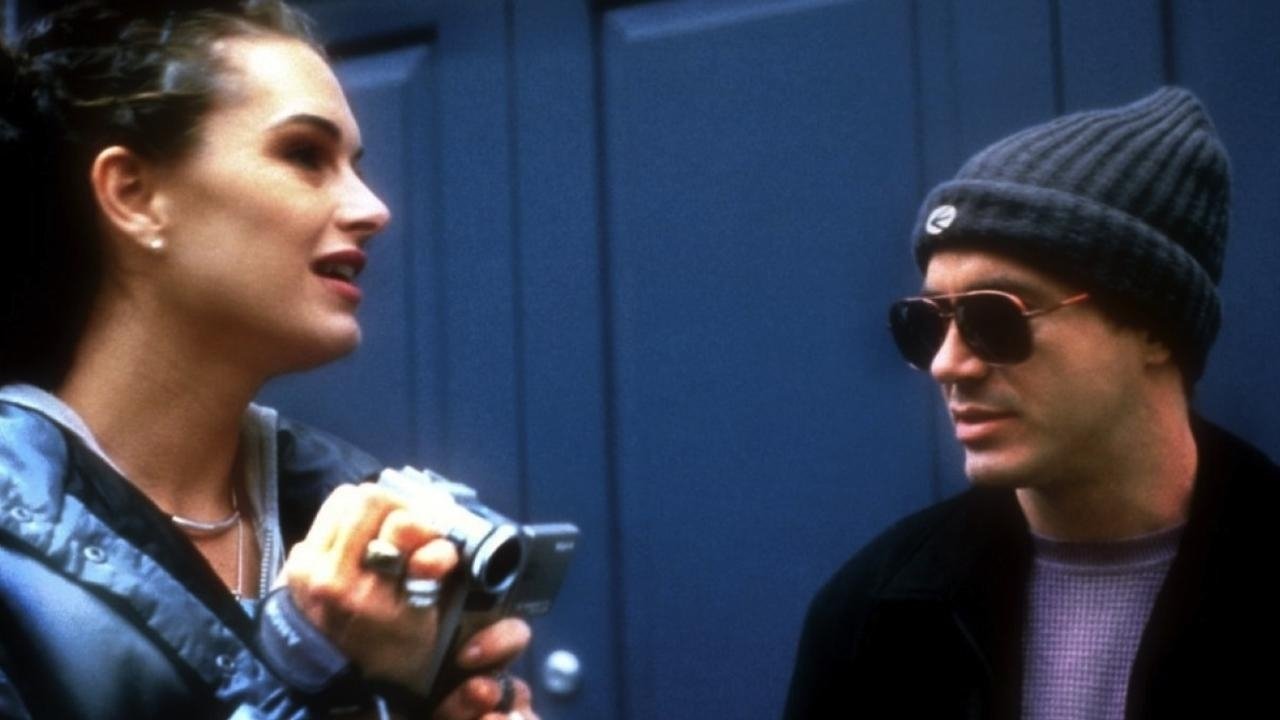
But it’s Robert Downey Jr., navigating a notoriously difficult period in his personal life, who delivers perhaps the film’s most electric and unsettling performance. His Terry Donager, Sam's gay husband who prowls the city looking for dangerous encounters, is a raw nerve exposed. There’s a harrowing lack of artifice here, particularly in a largely improvised scene where Terry confronts Mike Tyson. Knowing the context of RDJ's life at the time adds layers of uncomfortable resonance to his portrayal of a man flirting with self-destruction. It’s difficult to watch, yet undeniably powerful.
Retro Fun Facts: On Set Chaos and Cultural Clash
The film's chaotic energy wasn't just on screen. Toback encouraged his actors, particularly the non-professionals, to draw heavily on their own experiences. The infamous scene between RDJ and Tyson reportedly involved Tyson genuinely losing his temper with Downey Jr.'s character's provocative behaviour, creating a moment of terrifying realism that blurred the line between acting and reality. Shot on a modest budget (reportedly around $12 million), the film feels scrappy and immediate, using real NYC locations to enhance its documentary-like feel. Its initial reception was polarizing, praised by some for its boldness and condemned by others for its perceived exploitation and messy narrative – a controversy that perhaps only amplified its cult status among those looking for something outside the mainstream gloss of the late 90s. It barely made a dent at the box office (grossing around $5.2 million worldwide), cementing its place as a challenging curio rather than a commercial hit.
Wrestling with Authenticity and Exploitation
Rewatching Black and White today raises complex questions. What does it mean to be fascinated by another culture? When does appreciation tip into appropriation, or even exploitation? The film dives headfirst into these thorny issues, sometimes with insightful nuance, other times with a bluntness that feels problematic. The documentary crew within the film, particularly Shields' Sam, raises questions about the ethics of storytelling and the potential for observers to become participants, often with damaging consequences. Does the film succeed in offering meaningful commentary, or does it simply reflect the very exploitation it depicts? The answer likely lies somewhere in the messy middle, making it a film that provokes debate rather than providing easy answers. Isn't that sometimes the mark of a film that sticks with you, even if uncomfortably?
An Unsettling Time Capsule
Black and White is far from perfect. It’s structurally messy, tonally uneven, and some of its explorations of race and sexuality feel dated or uncomfortable through a modern lens. Yet, there’s something undeniably compelling about its raw nerve, its willingness to dive into murky waters without offering easy resolutions. It captures a specific, fraught moment in late 20th-century American culture with an unflinching, if sometimes unfocused, gaze.
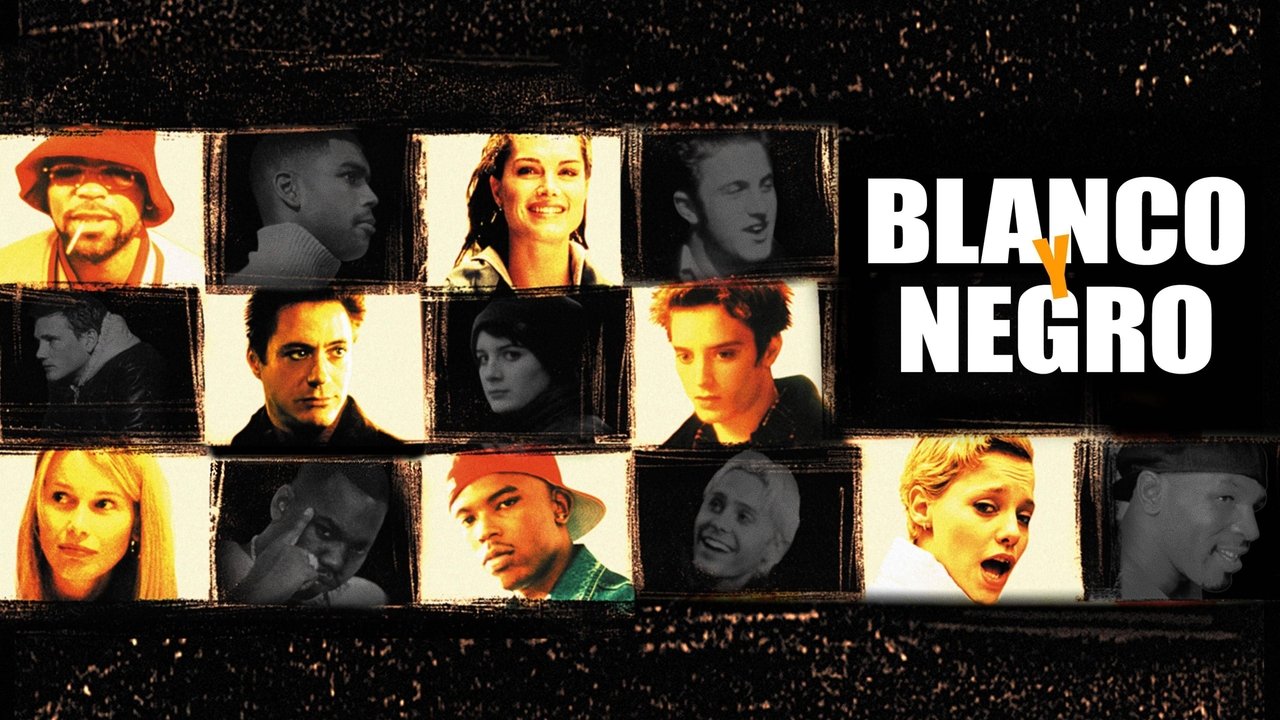
Rating: 6/10
This rating reflects the film's undeniable power in certain moments, particularly RDJ's performance and its capturing of a unique cultural zeitgeist, balanced against its significant flaws – the chaotic structure, uneven execution, and potentially problematic elements. It earns points for sheer audacity and memorable rawness, even if it often stumbles.
Black and White isn't a tape you'd pull out for casual viewing, but it remains a potent, provocative piece of late-90s filmmaking – an unsettling, flawed, but fascinating snapshot of a culture wrestling with itself. It lingers not as a polished narrative, but as a series of jarring questions and unforgettable faces caught in the glare of Toback’s confrontational lens.