Peppermint Candy
Okay, fellow travelers through the flickering landscapes of filmed memory, let's adjust the tracking on a tape that doesn't offer easy comfort, but instead demands we witness something raw, powerful, and deeply unsettling. While Peppermint Candy (released in South Korea in 1999, hitting international shores around 2000) technically pushes the boundary of our usual 80s/90s timeline, its soul feels intrinsically linked to the turbulent decades preceding it, and its arrival on import DVDs felt like a whispered secret among cinephiles browsing those slightly dusty shelves next to the familiar Hollywood fare. It’s the kind of film that arrived quietly but left an indelible mark, a gut punch delivered with haunting precision.

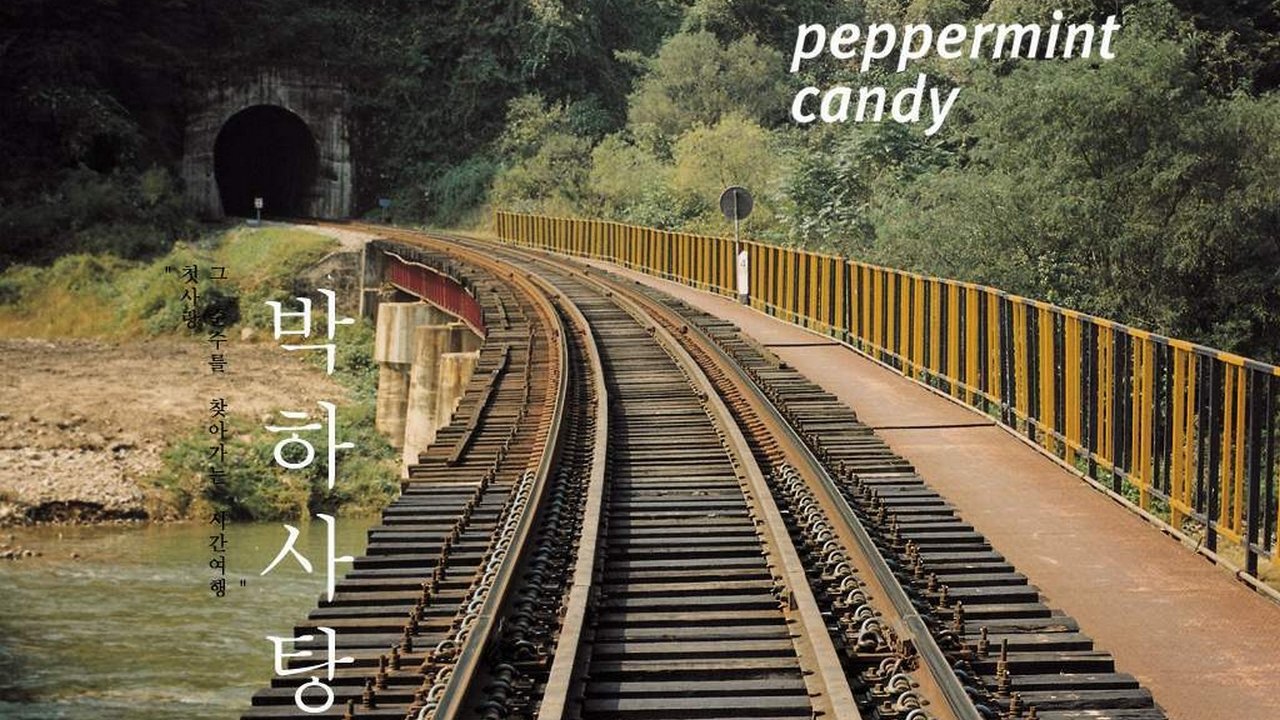
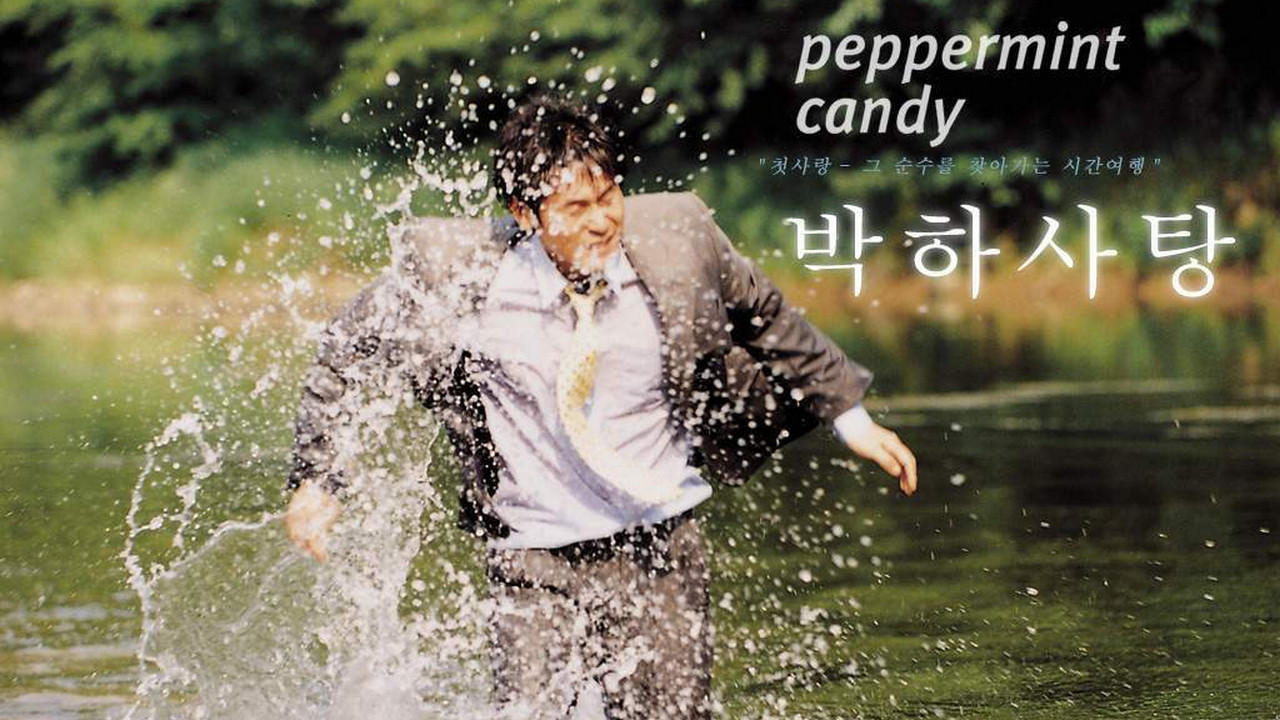
How does a life unravel so completely? That's the devastating question posed from the film's unforgettable opening moments. We meet Kim Yong-ho (Sol Kyung-gu) at a riverside reunion picnic in the spring of 1999. He’s a broken man, manic and despairing, culminating in him staggering onto a railway bridge, facing an oncoming train, and screaming, "I want to go back again!" And then, miraculously, devastatingly, the film grants his wish.
Rewinding a Broken Life
Director Lee Chang-dong, who transitioned from novelist to filmmaker with astonishing confidence (this being only his second feature after Green Fish), employs a reverse chronological structure. It’s not a gimmick, but the very core of the film's power. We journey backward through Yong-ho's life, witnessing key moments in reverse order, each chapter peeling back another layer of pain, compromise, and lost innocence. (Minor structural spoilers ahead, though unavoidable when discussing the film's core concept): From a failing businessman in the late 90s, to a brutal police detective in the 80s, to a traumatized soldier during the 1980 Gwangju Uprising, and finally, to a hopeful, gentle young man in 1979, nervously meeting his first love, Sun-im (Moon So-ri).
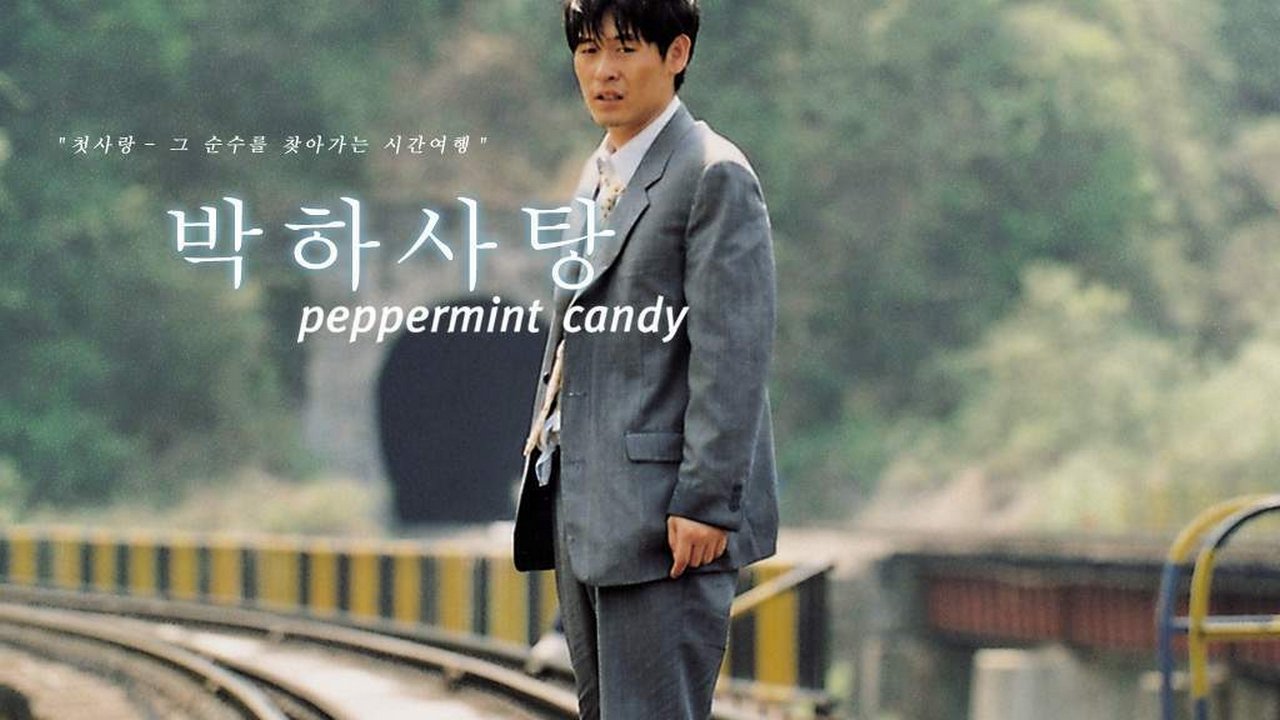
This structure forces us to confront the process of disintegration. We see the endpoint first – the wreckage – and then witness the events that forged it. Each step backward isn't a relief but often a fresh wave of understanding, tinged with tragic irony. We know the bright-eyed young man holding a camera in 1979 is destined for darkness, and the weight of that knowledge is crushing. Lee Chang-dong masterfully uses this structure not just to tell Yong-ho's story, but to reflect on how personal trauma intertwines with the turbulent currents of South Korean history, particularly the scars left by political oppression and violence.
A Towering Performance of Pain
Central to the film's devastating impact is the performance by Sol Kyung-gu. It's not just acting; it's an act of raw, emotional exposure. He embodies Yong-ho across two decades, capturing the subtle shifts in posture, the hardening of his eyes, the erosion of his spirit. The transformation from the hopeful youth to the hollowed-out man is utterly convincing and heartbreaking. Watching him navigate the different stages of Yong-ho’s decline – the forced brutality of his police work, the callousness masking deep wounds, the moments where the "original" Yong-ho flickers through before being extinguished again – is witnessing screen acting of the highest caliber. It’s said that Sol struggled deeply with the role's emotional toll, and frankly, you can see why. It’s a performance that stays with you, burrowing under your skin.

Supporting players, like Moon So-ri as the symbol of lost purity and Kim Yeo-jin as Hong-ja, the wife who bears witness to his later-stage decline, are equally vital, providing the human context against which Yong-ho’s tragedy unfolds.
The Lingering Taste of Bitterness
The titular peppermint candy, offered by his first love Sun-im in their youth, becomes a poignant, recurring symbol. It represents a purity and sweetness that life, history, and Yong-ho’s own choices systematically corrupt. Its taste, initially innocent, becomes inextricably linked with moments of profound trauma and regret. It’s a simple object imbued with immense symbolic weight, handled with subtlety by Lee.
There isn't much in the way of "Retro Fun Facts" that feel appropriate for the tone here, but it’s worth noting that Peppermint Candy was a significant film in the burgeoning Korean New Wave cinema movement. Its unflinching look at recent historical trauma and its sophisticated narrative structure announced Lee Chang-dong (who would later give us masterpieces like Oasis, Secret Sunshine, and Burning) as a major international directorial voice. The film doesn't shy away from depicting the brutality of the Gwangju Uprising and its lasting psychological impact, a subject often treated cautiously in South Korean media at the time. It cost around $1.5 million to make – a modest sum even then – but its impact far outweighed its budget, resonating deeply both domestically and critically abroad.
Why It Haunts Us
Peppermint Candy isn't an "enjoyable" watch in the conventional sense. It's demanding, emotionally draining, and forces uncomfortable reflections on complicity, the loss of innocence, and the ways societal violence can shatter individual lives. Yet, it’s undeniably brilliant filmmaking. The direction is assured, the writing is profound, and Sol Kyung-gu's performance is unforgettable. It doesn't offer easy answers or catharsis, mirroring the often-unresolved nature of deep trauma.
What lingers most after the credits roll? For me, it’s the haunting image of that train, relentlessly moving forward in the narrative but backward in time, carrying Yong-ho toward his tragic beginning. It’s a powerful metaphor for the inescapable nature of the past and the way history shapes us, even when we desperately wish to turn back. Does revisiting the past truly allow escape, or does it simply clarify the path to ruin?
Rating: 9/10
This near-perfect score reflects the film's masterful construction, its thematic depth, and the sheer power of its central performance. It's a harrowing journey, lacking the escapism we often seek in retro cinema, but its unflinching honesty and artistry make it essential viewing. It earns its emotional weight without resorting to manipulation, leaving a profound, melancholic echo long after the screen goes dark.
Peppermint Candy is a testament to the power of cinema to confront difficult truths, a challenging but ultimately rewarding experience that reminds us why we fell in love with film's ability to explore the darkest corners of the human heart and history. A vital piece of world cinema that deserves its place on any serious cinephile's shelf, virtual or physical.