The Day a Pig Fell Into the Well
Okay, settle in for this one. Flickering fluorescent lights of the video store, the scent of plastic cases and maybe stale popcorn… amidst the familiar comfort of big-budget explosions and teen comedies, sometimes you’d find a cover that just… stopped you. Something unassuming, maybe foreign, hinting at a different kind of story. That’s the territory we’re wandering into with Hong Sang-soo’s striking 1996 debut, The Day a Pig Fell Into the Well (돼지가 우물에 빠진 날). This wasn't likely sharing shelf space with Independence Day at your local Blockbuster, but for those who dug a little deeper, perhaps in the "World Cinema" section often tucked away in a corner, it offered a potent, unsettling glimpse into the burgeoning Korean New Wave.

Four Lives Adrift in Seoul
Forget straightforward narratives. The Day a Pig Fell Into the Well throws us into the orbits of four loosely connected Seoul residents: Hyo-seop (Kim Eui-sung), a struggling novelist tangled in an affair with a married woman; Bo-kyung (Lee Eung-kyung), that married woman, feeling trapped in her suffocating marriage; Dong-woo (Park Jin-sung), Bo-kyung's distant, germaphobic husband; and Min-jae (Cho Eun-sook), a naive movie theater ticket-seller infatuated with the oblivious Hyo-seop. We follow each character through their own chapter, witnessing their frustrations, petty desires, and profound loneliness. Their paths cross, sometimes directly, sometimes tangentially, but true connection remains frustratingly elusive. It’s less a plot-driven film and more an observational tapestry of modern urban discontent.
The Hong Sang-soo Blueprint

Watching this now, it feels like discovering the Rosetta Stone for Hong Sang-soo's entire filmography. All the hallmarks that would define his later, often more celebrated works (like Woman is the Future of Man or Right Now, Wrong Then) are present here in nascent form: the awkward, painfully realistic dialogue, the long takes that force you to sit with the characters' discomfort, the cyclical patterns of behaviour, the preoccupation with infidelity and artistic frustration, and that signature blend of melancholic realism occasionally punctured by unexpected, almost absurd moments. Hong, who studied filmmaking in the US before returning to Korea, wasn't just making a movie; he was establishing a unique cinematic language from his very first feature. It’s said he drew inspiration from varied sources, including the fragmented narratives found in certain strands of modern literature – a background fitting for the film’s protagonist, a writer himself.
Performances Steeped in Awkward Truth
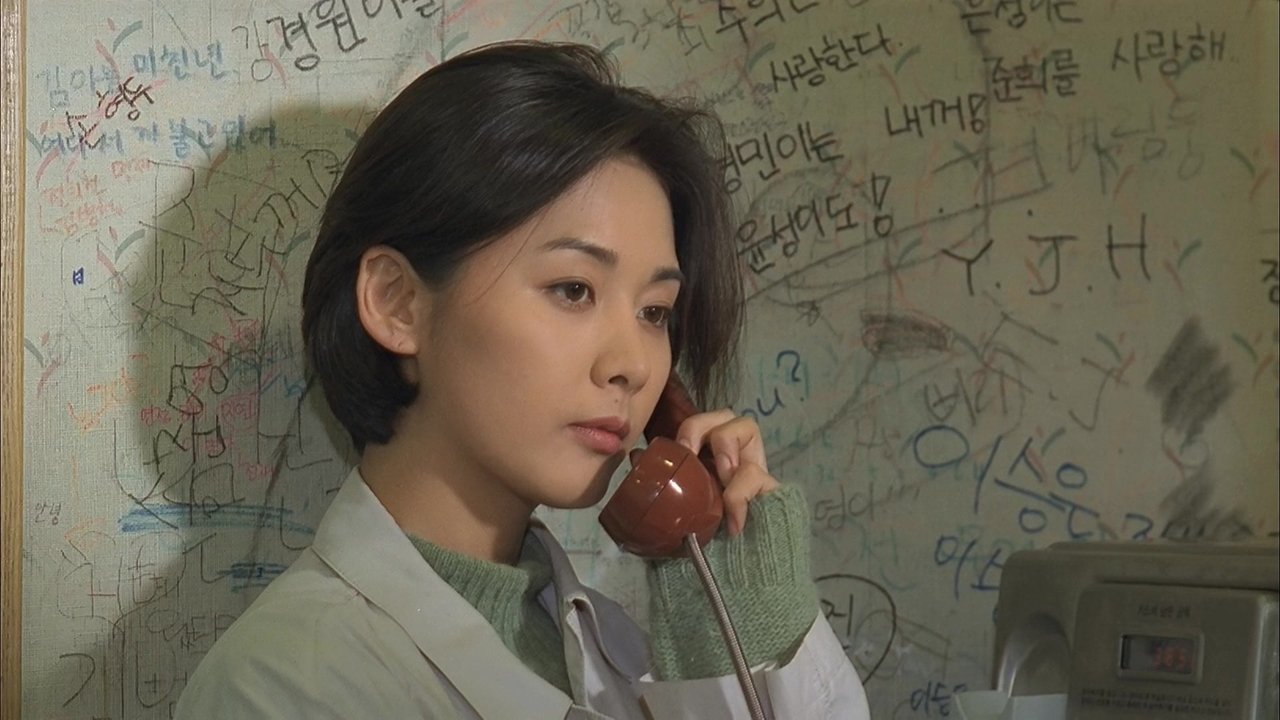
The power of Pig lies heavily in its performances. There's no Hollywood gloss here. Kim Eui-sung embodies Hyo-seop’s simmering insecurity and selfishness with a painful transparency. He’s not likable, often quite the opposite, but his struggle feels undeniably human. Lee Eung-kyung conveys Bo-kyung’s quiet desperation beautifully, her face often a mask barely concealing inner turmoil. You feel the weight of her compromises. Even the smaller roles resonate, including a notable early appearance by Song Kang-ho (yes, that Song Kang-ho from Parasite and Memories of Murder!) as Dong-woo’s disgruntled colleague. It's fascinating to see him here, already possessing that screen presence, years before becoming one of Korea's biggest stars. The actors navigate Hong’s challenging, naturalistic style with remarkable authenticity, making the mundane interactions – failed seductions, passive-aggressive arguments, lonely meals – feel uncomfortably real.
A Vibe Beyond the Usual VHS Fare
Let's be honest, this isn't your typical Friday night popcorn flick from the 90s. There's a pervasive sense of unease, a bleakness that mirrors the characters' internal landscapes. The Seoul depicted here isn't the gleaming metropolis often seen today, but a more anonymous, isolating cityscape. The film demands patience; its rewards are subtle, accumulating through observation rather than dramatic payoffs. The title itself, reportedly inspired by a John Cheever short story (though Hong has sometimes been coy about direct lineage), evokes a sense of inescapable, almost accidental misfortune – a fitting metaphor for the characters' plights. It’s a film that doesn’t offer easy answers or catharsis. Instead, it asks you to observe, to reflect on the quiet desperation that can simmer beneath the surface of everyday life. What does it mean to be truly connected, or disconnected, in a modern world? The film doesn't preach; it simply presents these fractured lives and lets the discomfort linger.
Retro Fun Facts
- Debut Hurdles: Securing funding for such an unconventional debut wasn't easy. Hong reportedly faced skepticism about the film's commercial viability, a common struggle for auteur directors starting out. Its critical success, however, particularly winning awards internationally (like the Dragons & Tigers Award at Vancouver), was crucial in establishing his career.
- The Title's Resonance: That title! It’s enigmatic and memorable. While the Cheever connection is often cited, the sheer oddness of it perfectly captures the film’s off-kilter perspective on mundane tragedy. It became a talking point in Korean film circles.
- Launching Pad: Beyond Song Kang-ho, the film provided a significant platform for its lead actors within the Korean independent film scene, showcasing their ability to handle complex, naturalistic material.
This film represents a different kind of VHS memory – not the shared joy of a blockbuster, but the quiet thrill of discovering a unique voice, a challenging perspective that stayed with you long after the tape clicked off. It’s a reminder that the 90s wasn't just about grunge and dial-up; it was also a fertile ground for bold, independent cinema finding its way to curious viewers through those plastic rectangles.
Rating: 8/10
This rating reflects the film's undeniable artistic merit, its significance as Hong Sang-soo's debut, and the strength of its unflinchingly honest performances. It's a challenging, sometimes bleak watch, which might not appeal to everyone seeking lighter fare, preventing a higher score in the context of general "VHS Heaven" enjoyment. However, its observational power and realistic portrayal of urban alienation make it a landmark of 90s Korean cinema.
It leaves you pondering not grand events, but the quiet weight of unspoken disappointments and the intricate, often frustrating, dance of human relationships. A sobering, yet essential, find from the deeper shelves of the video store era.